Caribbean food was never the problem. These 5 island dishes keep every bit of the flavor.
Island food doesn't need fixing. Five healthy Caribbean recipes, the pantry behind them and easy swaps that keep every bit of the flavor.
The short answer: Healthy Caribbean recipes keep every bit of the flavor, because the flavor was never the problem. Allspice, thyme, scallion, garlic and scotch bonnet are what make island food taste like home. So you keep the seasoning, bake instead of deep fry, add more beans and greens, and make your sauces from scratch.
It’s Sunday afternoon and you can almost smell it: thyme, allspice, coconut and pepper from somebody’s kitchen. Then a voice in your head says island food is too heavy. However, most healthy Caribbean recipes are just the old home-cooked versions, and they never needed fixing.
So this isn’t about bland jerk or sad steamed fish. Instead, it’s five dishes, the island pantry behind them and a few easy swaps. Every dish links to a full recipe.
Is Caribbean food healthy?
Traditional Caribbean food is built on fish, beans, peas, leafy greens, roots like yam and sweet potato, tropical fruit and coconut. Then it’s layered with herbs and spices. That’s a strong base for any plate.
For example, kidney beans, pigeon peas and chickpeas show up in dish after dish. Beans bring plant protein and fiber, and the Harvard Nutrition Source explains why legumes are worth eating often. Also, the region’s fish, from snapper to kingfish, is a lean, high-protein staple.
So where does the heavy reputation come from? Mostly from a few habits, not the cuisine itself. Think deep frying, very salty seasoning cubes, sugary drinks and huge portions of white rice, dumplings or dough. The good news is that all of those are easy to change.
The island pantry: where the flavor really lives
Caribbean cooks don’t rely on sugar or heavy cream for flavor. Instead, they use fresh herbs, whole spices and peppers. Stock these and almost any meal tastes like the islands.
- Allspice (pimento). The warm, clove-like spice in jerk, escovitch and rice and peas. Buy whole berries and ground.
- Fresh thyme and scallion. The heart of Jamaican seasoning. Use whole sprigs in pots.
- Scotch bonnet pepper. Fruity and very hot. Add it whole for aroma, or slice it for heat.
- Green seasoning. A fresh blend of culantro or cilantro, thyme, scallion, garlic and pepper, used across Trinidad and the Eastern Caribbean.
- Curry powder and roasted cumin. The base of Trini and Guyanese curries.
- Garlic, ginger, lime and coconut milk. For brightness, warmth and richness.
Plus, everything on this list is a whole herb or spice. A 2-minute green seasoning in the blender gives you more flavor than anything you can buy.
5 healthy Caribbean recipes to cook this week
Each of these healthy Caribbean recipes is real food, boldly seasoned and doable on a weeknight. Protein and time are rough, per serving.
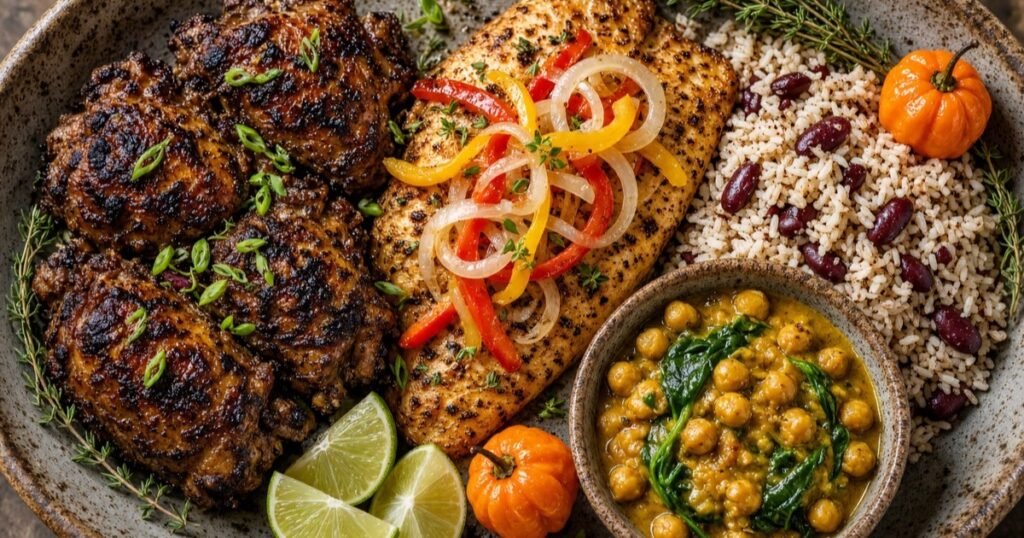
- Jerk chicken thighs with roasted cabbage: a homemade jerk rub of scallion, thyme, allspice and scotch bonnet, roasted on one pan. About 40 minutes, high protein.
- Oven-baked escovitch fish: allspice and lime snapper roasted until crisp, then topped with a scotch bonnet vinegar pickle. About 35 minutes, 34g protein.
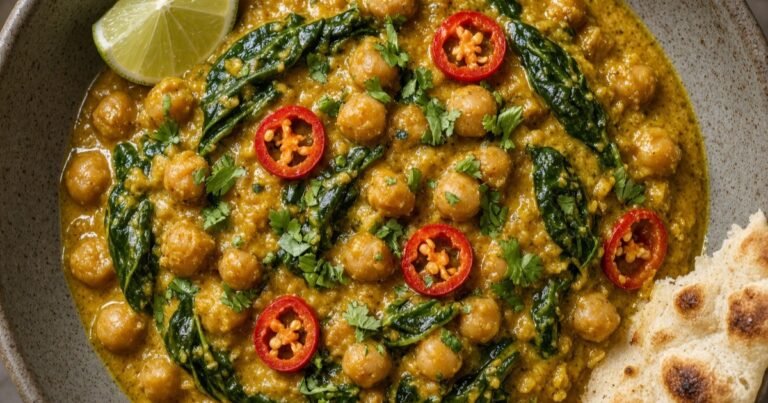
- Trini curry channa with spinach: chickpeas in toasted curry with green seasoning and roasted cumin. About 30 minutes, 13g protein, 12g fiber.
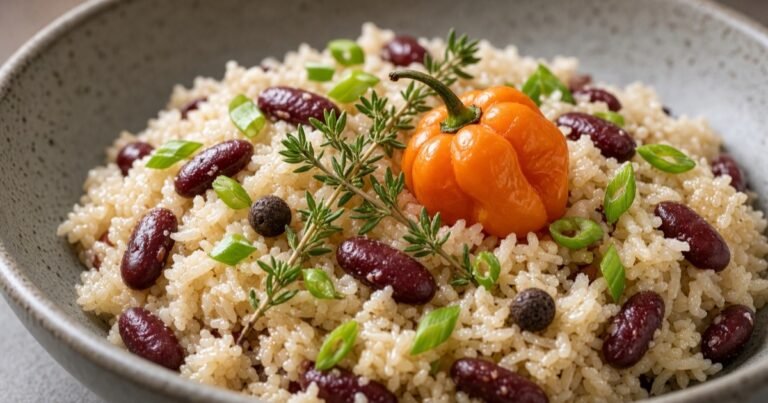
- Jamaican rice and peas: rice and kidney beans in coconut milk with thyme and a whole scotch bonnet. About 40 minutes, 9g protein.
- Creole black-eyed peas: a cousin from the Creole kitchen, slow-simmered with onion, pepper and spice. Great next to fish or greens.
Also, these dishes work together. For example, pair the escovitch fish with rice and peas on Friday. Then the curry channa covers lunch for two days.
Healthy Caribbean swaps that keep the flavor
You don’t have to give up the dishes you love. Instead, change the method and the plate. That’s how most healthy Caribbean recipes get lighter without losing anything.
- Bake or grill instead of deep frying. A smoking-hot sheet pan gives fish and chicken crisp edges with a spoon of avocado oil.
- Make your own green seasoning. Fresh herbs bring more flavor, and you control the salt.
- Cook with coconut oil, olive oil or butter. They taste better, and they’re real food.
- Add more peas to the rice. More beans means more protein and fiber in every scoop.
- Fill half the plate with greens and vegetables. Callaloo, cabbage, spinach, okra or a crunchy slaw.
- Swap sugary drinks for sorrel or ginger beer you make at home. Then you choose the sweetness.
How to build a balanced island plate
Caribbean plates are often heavy on starch: rice, dumplings, macaroni pie and plantain all at once. So a simple rule helps.
First, pick one protein, like fish, chicken, eggs or beans. Next, pick one starch, like rice and peas, yam, sweet potato or a ripe plantain roasted in the oven. Then fill the rest of the plate with vegetables. That’s it.
For example, escovitch fish with a scoop of rice and peas and a pile of steamed cabbage is a full, balanced dinner. Or, for breakfast, try spinach scrambled eggs with scotch bonnet and thyme. It’s an island-style start with real protein.
What about plantain, dumplings and patties?
These are the foods people worry about most. However, none of them has to leave your table. Instead, think about how often, how much and how they’re cooked.
- Plantain. Ripe plantain is a whole food with fiber and potassium. So roast slices in the oven with a little coconut oil and a pinch of salt until the edges caramelize. They taste like dessert.
- Dumplings and fried bakes. Keep them as a weekend treat. On weeknights, roasted yam, sweet potato or green banana fill the same spot on the plate.
- Patties and roti. Enjoy them when you’re out, and enjoy every bite. Then, at home, lean on the stews, curries and fish that make up most of the everyday island table.
Also, remember that portion is the real lever here. One scoop of starch, a big serving of protein and plenty of vegetables keep you satisfied. That way, nothing feels off-limits, and nothing feels like a diet.
Cooking Caribbean food on a busy week
Island cooking can feel like a whole-Sunday project. However, a little prep makes it weeknight food.
- Blend green seasoning once. It keeps in a jar in the fridge for about a week. Use it on fish, chicken, beans and eggs.
- Mix your jerk rub in a big batch. Then marinating takes 2 minutes.
- Cook a pot of beans on Sunday. Use them in rice and peas, curry or stew all week.
- Make the escovitch pickle ahead. It lasts a week in the fridge and gets better as it sits.
Also, if you love the soul food side of this family tree, our guide to keeping soul food flavor and losing the guilt uses the same ideas.
Frequently asked questions
Is Caribbean food healthy?
Traditional Caribbean food can be very healthy. It’s built on beans, fish, greens, roots, fruit and big seasoning. The less healthy parts are usually deep frying, a lot of salt, sugary drinks and very large portions of white rice or dough.
What is the healthiest Caribbean dish?
There’s no single winner. Still, dishes like curry channa, steamed fish, callaloo, escovitch fish made in the oven and rice and peas with plenty of beans are all whole-food meals packed with flavor.
How do you make Caribbean food healthier without losing flavor?
Keep every herb, pepper and spice. Then change the cooking method and the plate: bake or grill instead of deep frying, add more beans and greens, and make the sauces from scratch.
Is jerk chicken healthy?
It can be. Jerk seasoning is mostly scallion, thyme, allspice, garlic, ginger and scotch bonnet. Grilled or roasted chicken thighs with that rub are a high-protein meal, especially next to vegetables.
Save this for your next Sunday pot, and pick just one dish to cook this week.
This article is for general information and is not medical or nutrition advice.