Waking up stiff, puffy and tired is not a personality trait. Here’s where an anti-inflammatory diet starts.
What an anti-inflammatory diet really is, the foods to lean on, what to eat less of, and a simple first day of real meals.
The short answer: An anti-inflammatory diet is a way of eating built on whole foods: colorful vegetables and fruit, beans, whole grains, nuts, olive oil, fish and lots of herbs and spices. It also means eating fewer sugary drinks, refined carbs, fried foods and processed meats. You start with one meal and one swap, not a whole new life.
It’s Wednesday. You woke up stiff, your rings feel tight, and you were tired before the coffee even kicked in. So you search for an anti-inflammatory diet and find a wall of powders, rules and 30-day plans. Take a breath. This isn’t another diet to fail at.
Instead, it’s mostly food you already know, cooked with more color and more flavor. Here’s what it is, what to eat, and a simple first day you can actually make.
What is an anti-inflammatory diet?
First, a quick bit of science. Inflammation is your immune system doing its job. When you cut your finger or catch a cold, your body sends help, and that short burst is a good thing.
The problem is when that response hums along at a low level for a long time. According to Harvard Health, chronic inflammation is linked to heart disease, diabetes, arthritis and other conditions. Plus, research suggests some foods may push it up while others may help calm it down.
So an anti-inflammatory diet isn’t one official plan with a logo. It’s a pattern. In fact, the Mediterranean way of eating is often called the closest fit, because it’s rich in produce, beans, whole grains, fish, nuts and olive oil.
Why it matters more after 30
Life stacks up. You sleep less, sit more, eat on the run and carry a lot of stress. As a result, many women notice more aches, more puffiness and more afternoon crashes than they did at 25.
Food isn’t the only lever, of course. But it’s the one you touch three or four times a day. That’s why small, steady changes on your plate can add up. Think more steady energy and feeling lighter, not a quick fix.
What to eat: the anti-inflammatory foods list
Here’s the good news. You don’t need anything fancy. These are the foods that show up again and again on anti-inflammatory lists:
- Leafy greens: spinach, kale, collards and mustard greens.
- Colorful fruit: berries, cherries, oranges and pomegranate.
- Tomatoes: fresh, canned or simmered into sauce.
- Fatty fish: salmon, sardines, mackerel and trout, which bring omega-3 fats.
- Beans and lentils: cheap, filling and full of fiber.
- Nuts and seeds: walnuts, almonds, chia, flax and pumpkin seeds.
- Whole grains: oats, brown rice, quinoa and real sourdough.
- Extra virgin olive oil: your everyday cooking and drizzling fat.
- Herbs and spices: garlic, ginger, turmeric, cumin, cinnamon and fresh herbs.
Notice something? Many of these are already in the food you grew up on. For example, collard greens, black-eyed peas, jerk-spiced fish, dal and a pot of beans all fit. Our guide to whether soul food is healthy shows how to keep those flavors and lighten the method.
What to eat less of (without the guilt)
Nothing here is forbidden. Still, research points to a few foods that may fuel inflammation when they show up every day. So treat these as sometimes foods:
- Sugary drinks: soda, sweet tea and syrupy coffee drinks.
- Refined carbs: white bread, pastries and many packaged snacks.
- Fried foods: especially deep-fried fast food.
- Processed meats: hot dogs, bacon and deli meats, plus a lot of red meat.
Instead of cutting all of it at once, swap one thing. For instance, trade the afternoon soda for sparkling water with lime. Then, next week, pick another.
Where to start: 5 simple first steps
This is where most plans lose you. They ask for everything on day one. Instead, start an anti-inflammatory diet with these five moves, one at a time:
- Add one color to every meal. Spinach in your eggs, berries on your yogurt, peppers in your lunch.
- Cook with olive oil and avocado oil. Butter and ghee are fine for flavor, too.
- Eat fish twice a week. The American Heart Association suggests at least two servings of fish a week, ideally fatty fish like salmon.
- Make beans a habit. A pot of seasoned beans or lentils covers lunches all week.
- Season boldly. Garlic, ginger, turmeric, cumin, chili and citrus make healthy food taste like something you crave.
Also, don’t forget protein. It keeps you full, so you’re less likely to grab the vending machine at 3 PM. Our guide on how much protein you actually need has easy per-meal targets.
A sample anti-inflammatory day
Every dish below is a real Clean Fit Fab recipe, made with whole foods, big flavor and no seed oils. So you can cook this whole day this week.
- Spinach scrambled eggs with scotch bonnet and thyme: breakfast, about 20 g protein, 8 minutes
- Turmeric ginger red lentil soup: lunch, about 17 g protein and 10 g fiber, 35 minutes (make it on Sunday)
- A handful of walnuts and an orange: snack, about 5 g protein, no prep
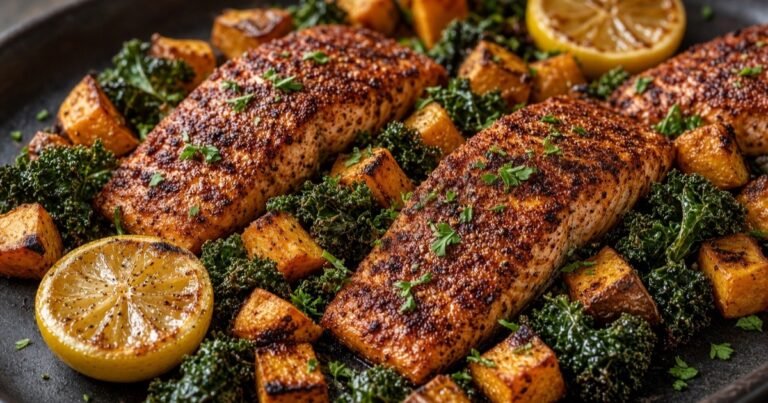
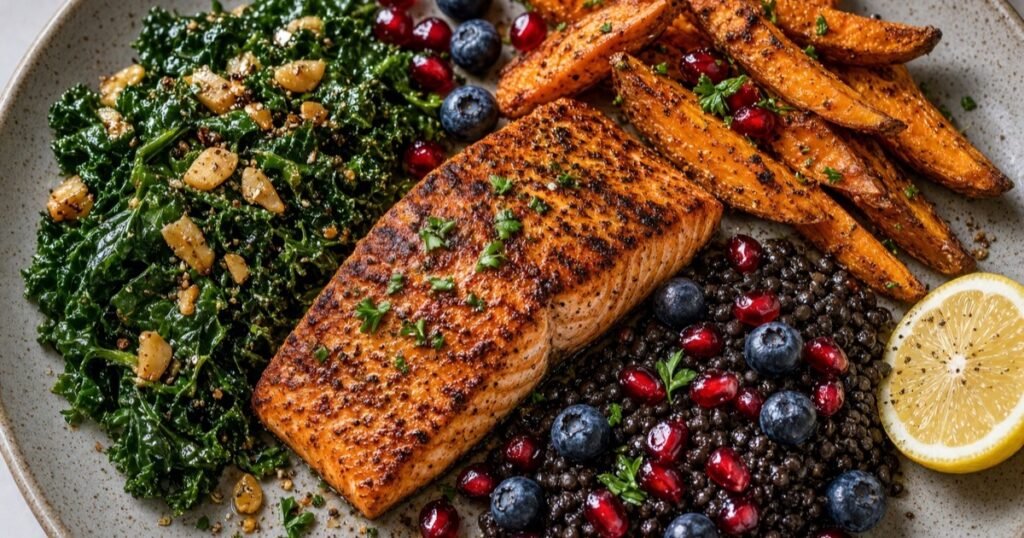
- Smoky sheet pan salmon with sweet potatoes and kale: dinner, about 34 g protein, 40 minutes on one pan
Want a meatless night instead? Then try Creole black-eyed peas with a side of smoky collard greens. Both are packed with fiber, greens and flavor.
Do you need turmeric supplements or special powders?
Not to start. Turmeric, ginger and garlic are wonderful in food, and they make every pot taste better. However, the strongest research is on whole eating patterns, not one magic ingredient.
So spend your money on vegetables, beans, fish and good olive oil first. If you’re curious about supplements, talk with your doctor, especially if you take other medicines. Meanwhile, a pinch of black pepper with turmeric in your cooking is a classic pairing worth keeping.
Finally, remember the rest of your life counts too. Sleep, a daily walk and a few minutes to breathe all work alongside your plate.
Frequently asked questions
What foods are on an anti-inflammatory diet?
Think colorful produce, leafy greens, berries, beans and lentils, whole grains, nuts and seeds, fatty fish like salmon and sardines, extra virgin olive oil, and herbs and spices like garlic, ginger and turmeric.
How long does it take to notice a difference?
It varies. Some people say they feel more steady energy within a few weeks of eating more whole foods and fewer sugary drinks. However, the real payoff is long term, so think in months, not days.
Is coffee okay on an anti-inflammatory diet?
For most people, yes. Coffee contains polyphenols, and Harvard Health lists it among foods that may be protective. Just go easy on the sugar and sweet creamers.
Do I have to give up meat?
No. Fish, chicken, eggs, beans and lentils all fit. Many experts suggest eating less red and processed meat, so make those an occasional choice instead of a daily one.
Save this for your next grocery run, and send it to the friend who’s always achy and tired.
This article is for general information and is not medical or nutrition advice.