Your appetite shrank. Your protein needs didn’t. Here’s what to eat on a GLP-1.
What to eat on a GLP-1 when your appetite is tiny: protein first, fiber, fluids and small meals with big flavor, plus a sample day with real recipes.
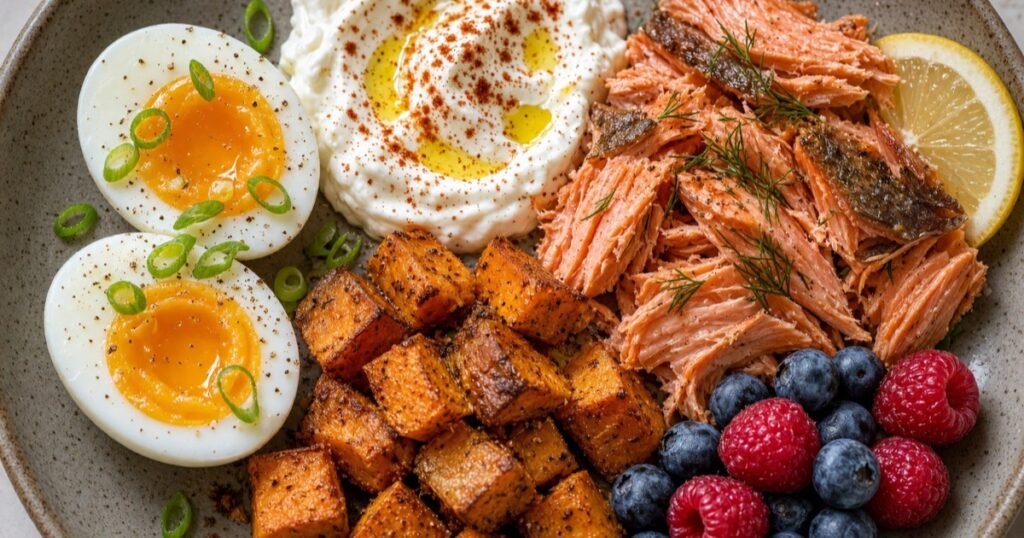
The short answer: What to eat on a GLP-1 comes down to four things. Protein first at every meal. Fiber from real food. Plenty of fluids. And smaller portions you actually enjoy. Your appetite is smaller now, so every bite has to work harder. Build each plate around 20 to 30 grams of protein and add a fruit or a vegetable. Then keep the flavor bold so you still want to eat.
It’s 7 PM. You cooked dinner for everyone else, finally sat down, and three bites in you were done. Not full in a cozy way. Just done. Then an hour later you feel shaky and a little queasy, and you can’t tell if you’re hungry or not.
That’s the part nobody explains when they hand you the pen. The medication quiets the food noise. It doesn’t tell you what to eat on a GLP-1 so you still feel strong, steady and like yourself. This guide does, in plain language, with a sample day and real recipes.
What to eat on a GLP-1: the simple rule
Think protein, plants, fluids, in that order. Eat the protein on your plate first, because you may only have room for half of what you used to eat. Next, add a vegetable or a piece of fruit for fiber. Then sip fluids between meals rather than with them, so you don’t fill up on water before the food.
Portions shrink, so quality has to go up. Mayo Clinic Press puts it simply: smaller appetites need quality nutrition. For example, a small bowl of garlicky Greek yogurt with crispy chickpeas does far more for you than a handful of crackers. It takes about the same effort.
One more rule: eat slowly and stop when you feel comfortable, not stuffed. The medication slows how fast your stomach empties. So a plate that used to feel normal can now leave you queasy for hours.
Protein first, every single time
Here’s why protein matters so much right now. When you lose weight quickly, some of what you lose is muscle, not just fat. In one large semaglutide trial, body scans showed that lean mass made up a sizable share of the weight lost. In the group measured, it was close to 40 percent. Enough protein, plus a little strength work, may help you hold on to more of it.
How much? Many experts suggest at least 60 to 75 grams a day. Mayo Clinic Press suggests aiming for roughly 80 to 100 grams spread across the day. The key word is spread. Your body uses protein better in doses of 20 to 30 grams at a time than in one giant dinner.
Here’s what that looks like in real food, with rough numbers per serving:
- 2 pasture-raised eggs: about 12g.
- 1 cup plain Greek yogurt: about 17 to 20g.
- 1/2 cup cottage cheese: about 12g.
- 3 oz cooked chicken or turkey: about 25g.
- 3 oz wild salmon or canned tuna: about 20g.
- A 3 oz serving of shrimp: about 20g.
- 1 cup cooked lentils: about 18g.
- 1 cup black beans or black-eyed peas: about 15g.
- 1/2 cup extra-firm tofu: about 10g.
Also, if solid food is a struggle in the morning, a protein-rich drink counts. Blend Greek yogurt or soy milk with frozen berries and a spoonful of chia seeds. Then sip it slowly over 20 minutes instead of drinking it in two gulps.
Fiber: the fix for the side effect nobody warns you about
Constipation is one of the most common complaints on these medications, and it’s miserable. Fiber helps keep things moving, and it also helps you feel satisfied on less food. The Dietary Guidelines for Americans suggest about 25 grams a day for women ages 31 to 50 and about 22 grams after 50. Most women get far less.
The trick is to add it slowly, with water, so you don’t trade constipation for bloating. Start with one high-fiber food at each meal:
- Berries, pears and apples with the skin on.
- Beans, lentils and chickpeas, which bring fiber and protein in one.
- Oats, chia seeds and ground flaxseed.
- Sweet potatoes, carrots and winter squash.
- Collard greens, spinach, broccoli and cabbage.
- Avocado, for fiber and healthy fat together.
For instance, a half serving of Creole black-eyed peas next to your protein adds about 5 grams of fiber. Plus, beans are still one of the cheapest foods in the store, which matters when grocery prices keep climbing.
Drink more than you think you need
Dehydration quietly makes almost every side effect worse: the headaches, the fatigue, the constipation, even the nausea. Yet when your appetite drops, your thirst often drops with it. So you have to drink on purpose.
Keep a bottle where you can see it and sip all day. Water is the goal, but warm drinks count too, especially once the weather turns. Bone broth or a simple vegetable broth, ginger tea, peppermint tea, and milk or soy milk all add fluid. Some people find that fizzy drinks add to the bloating, so test what works for you. Also, go easy on alcohol. It can irritate your stomach, swing your blood sugar and dry you out.
Foods that may make nausea worse
Certain foods sit heavy in a slowed-down stomach. You don’t have to swear them off forever, but on a queasy day they’re the first to go:
- Greasy and deep-fried foods, which stay in the stomach longer.
- Rich, heavy cream sauces and very fatty cuts of meat.
- Very sweet drinks and desserts, which may spike blood sugar and worsen nausea for some people.
- Alcohol, especially on an empty stomach.
- Oversized portions of anything, even healthy food.
Instead, lean on the habits that help. Eat small meals every 3 to 4 hours. Put your fork down between bites. Stay upright for a while after eating rather than lying down. And when a wave of nausea hits, try a cup of ginger tea and a slice of sourdough toast. That’s a gentler landing than skipping food for hours.
A sample day on a GLP-1 (small plates, big flavor)
Here’s what to eat on a GLP-1 on a realistic day. Every dish links to its full recipe, so nothing here is a guess. Portions are smaller than the recipe serving sizes, so eat until you’re comfortable and save the rest for later.
- Breakfast: one slice of garlic tomato cottage cheese toast, about 20g protein, 6 minutes.
- Mid-morning: one or two garlic ginger marinated jammy eggs, made on Sunday, about 6g protein each.
- Lunch: a half bowl of lemon garlic tuna white bean salad, about 18g protein, no cooking.
- Afternoon: a pear or a handful of berries with a few almonds.
- Dinner: a half serving of the spicy salmon avocado bowl, about 15g protein, 8 minutes.
- Evening: a mug of ginger tea, or warm soy milk with cinnamon.
That day lands around 60 grams of protein and close to 20 grams of fiber, with almost no time at the stove. On days you can eat a little more, bump up the lunch or dinner portion first. For more ideas like these, see our guide to what to eat when you are too tired to cook.
Flavor matters more when your appetite is small
When you’re barely hungry, bland food is the fastest way to skip a meal entirely. That’s why every recipe on this site leans on bold seasoning: garlic, ginger, scallion, lemon, smoked paprika, cumin, fresh herbs and a little heat. Flavor makes a small plate worth finishing.
Ginger and lemon do double duty here. Both are classic kitchen remedies for a queasy stomach, and both make plain protein taste alive. Try shrimp cooked in avocado oil with grated ginger and garlic, or a squeeze of lemon and fresh dill over flaked salmon. Keep the cooking fat real too: extra virgin olive oil, avocado oil, butter or ghee, in small amounts so the meal stays light.
Finally, remember that this is a season, not a sentence. Your appetite may come back as your dose settles. The habits you build now will outlast the medication. Protein first, fiber daily, fluids all day: those help you feel good long after the appetite returns. Talk with your prescriber or a registered dietitian about your own protein and fluid targets.
Frequently asked questions
How much protein should you eat on a GLP-1?
Most experts suggest at least 60 to 75 grams a day. Many aim for 80 to 100 grams spread across the day. Think 20 to 30 grams per meal. Then ask your prescriber or a registered dietitian for a target based on your body weight.
What should you eat on a GLP-1 when nothing sounds good?
Go small, soft and savory. A few spoonfuls of Greek yogurt, a jammy egg, a cup of broth with shredded chicken, or warm soy milk with cinnamon all count. Eat slowly, then try again in a couple of hours instead of forcing a full meal.
Can you eat carbs on a GLP-1?
Yes. Choose carbs that bring fiber with them: oats, beans, sweet potatoes, fruit and sourdough. Pair them with protein so your energy stays steady, and keep them to about a quarter of your plate.
What foods should you avoid on a GLP-1?
Nothing is off limits forever. Still, greasy fried foods, heavy cream sauces, very sweet drinks, alcohol and oversized portions trigger nausea most often. Notice how you feel after eating, then adjust from there.
Save this for your next grocery run.
This article is for general information and is not medical or nutrition advice.