


West African food is one of the healthiest cuisines on earth. Here are 5 dishes to start with.
Beans, greens, peanuts, okra and bold spice: why West African food is one of the healthiest cuisines on earth, plus five dishes with full recipes to cook this week.
The short answer
West African food is one of the healthiest cuisines on earth, and most of us are not cooking it. Its everyday dishes are built on beans, leafy greens, peanuts, okra, tomatoes, peppers, fish and whole grains like fonio, seasoned with ginger, garlic and chili instead of cream and sugar. So you get big flavor and a plate that is mostly plants and protein.
On this page
It’s Sunday. You want to cook something new, something that tastes like a celebration, but every healthy recipe you find is another sad bowl of plain chicken and rice. Meanwhile, from Dakar to Lagos to Accra, families have been cooking bold, healthy West African food for centuries. Think stews thick with spinach, beans simmered in tomato and ginger, rice that tastes smoky, and skewers crusted in peanut spice.
This is your invitation to that table. Here’s what you will find below: what makes the cuisine work, the pantry behind it, five dishes you can cook this week, and easy swaps that keep every bit of the flavor. Every dish links to a full recipe with a vegan version.
Is West African food healthy?
Yes, when it is cooked the way it has always been cooked at home. First, look at a traditional plate from Senegal, Ghana or Nigeria, and you see a stew made of vegetables or beans, a modest scoop of grain or root, a small amount of fish or meat, and heat from fresh chili. In fact, that is close to what nutrition researchers describe as a balanced plate.
For example, black-eyed peas, the backbone of dozens of dishes, deliver about 13 grams of protein and 11 grams of fiber in a cooked cup, according to USDA data. Cooked spinach, the base of efo riro, brings around 6 milligrams of iron a cup. Also, okra, peanuts, sweet potato and tomatoes show up in meal after meal. The Harvard Nutrition Source explains why a diet heavy in vegetables and legumes like these is linked with better long-term health.
So where does the heavy reputation come from? Mostly from a few modern habits, not the cuisine: deep frying, salty stock cubes, sugary drinks and very large portions of white rice or dough. The good news is that every one of those is easy to change at home.
The West African pantry: where the flavor lives
West African cooks do not reach for cream, cheese or sugar to make food taste good. Instead, they build flavor from a short list of fresh and dried ingredients. Stock these, and then almost any weeknight dinner can taste like Lagos on a Friday night.
- Scotch bonnet peppers for fruity heat. Keep one whole in a pot for flavor, or instead blend it in for fire.
- Fresh ginger and garlic, often pounded or blended together, the base of nearly every stew.
- Red bell peppers and tomatoes, blended and fried down into the deep red sauce behind jollof and efo riro.
- Peanuts and natural peanut butter for stews and for yaji, the suya spice.
- Black-eyed peas, dried or canned, for stews, fritters and salads.
- Leafy greens: spinach, amaranth, collards, cassava leaves, whatever is cheap and fresh.
- Okra, which thickens soups and brings fiber and vitamin C.
- Fonio and millet, tiny whole grains that cook in minutes and sit under any stew.
- Dried thyme, curry powder, bay and smoked paprika, the seasoning cabinet behind jollof.
- Ground dried shrimp or crayfish, a spoonful of which makes a vegetable stew taste deeply savory.
Notice what is not on the list: bouillon cubes and packaged seasoning. Those are the biggest source of excess salt in modern versions, so skipping them matters. With garlic, ginger, smoked paprika and a good broth, you will not miss them.
5 healthy West African food recipes to cook this week
Each of these is a full recipe post with a WP Recipe Maker card, real-photo cover, nutrition estimates and a vegan switch. So start with whichever one your pantry already supports.
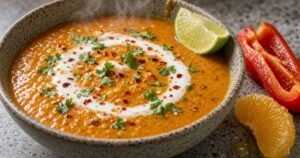
- Senegalese peanut stew with chicken and sweet potato. One pot, about 45 minutes, around 36g protein a bowl. Peanut butter, ginger, garlic and tomato make the sauce, while sweet potato replaces white starch.
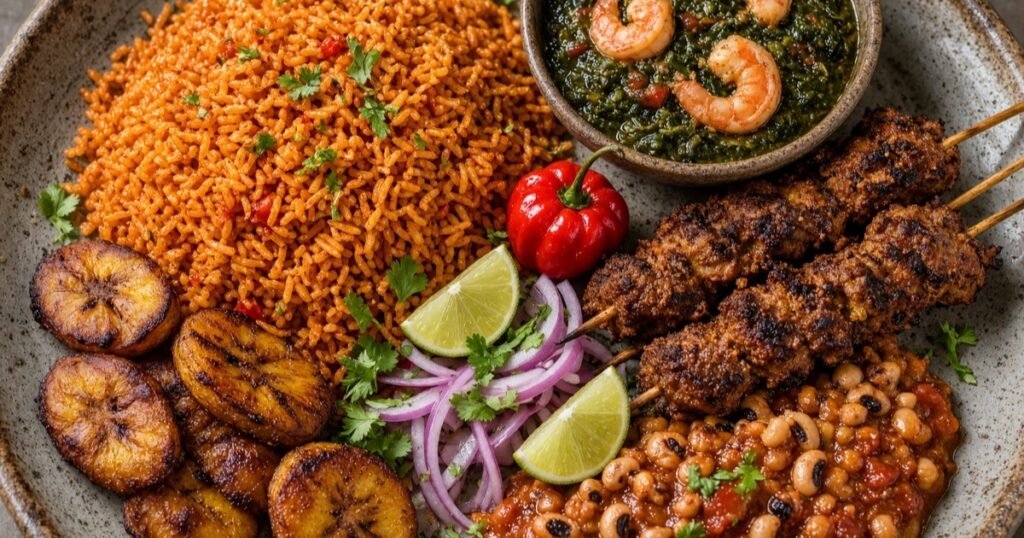
- efo riro, the Nigerian spinach stew, with shrimp. Here, a full pound of spinach disappears into a blended red pepper and tomato base. About 35 minutes and 28g protein a serving.
- smoky one-pot jollof rice. The famous party rice, made with vegetable broth and spices instead of stock cubes. One pot, naturally vegan, about 310 calories a cup.
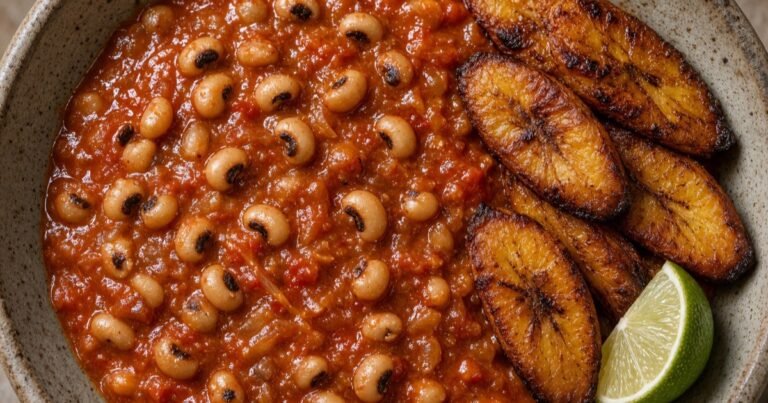
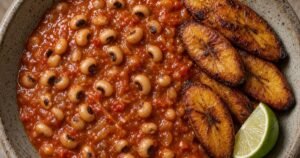
- Ghanaian red red, a black-eyed pea stew with baked plantains. Just two cans of beans, a tomato and ginger sauce and oven-baked sweet plantains, so it is pantry cooking. Thirty minutes, around 13g fiber a bowl.
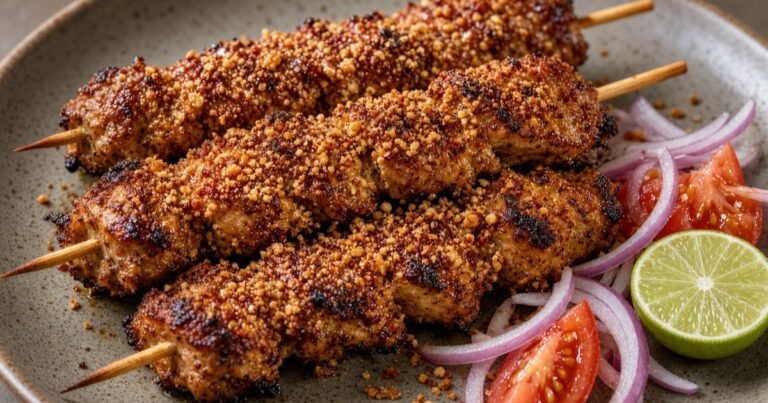
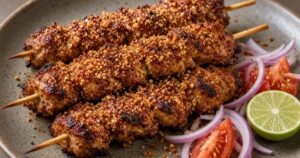
- chicken suya skewers with yaji peanut spice. Nigeria’s street-food skewers, made with a homemade peanut, ginger and cayenne spice. Ten minutes under the broiler, about 36g protein.
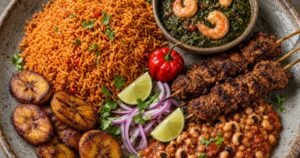
Together, these five cover a whole week: two bean-and-greens dinners, a rice base, a chicken stew and a grilled protein. Plus, every one of them reheats well, so cook once and eat twice.
What makes this way of eating work
Three habits stand out when you look at how healthy West African food is put together, and they are worth borrowing even when you cook something else.
- The stew is the vegetable. Instead of a side salad nobody eats, the main dish is already a pot of spinach, okra, peppers or beans.
- Protein comes from more than meat. Beans, peanuts and fish carry most meals, and meat is often a flavoring rather than the center of the plate.
- Heat and acid replace salt and sugar. Chili, ginger, lime and tomato make food taste alive, so you need less of everything else.
That’s why a bowl of red red with plantains or efo riro over fonio feels satisfying in a way that plain grilled chicken never does. You are full, you are not bored, and so you did not need a dessert to feel finished.
How to build a West African plate on a weeknight
You do not need a three-hour Sunday pot to eat this way. Instead, use this simple template.
- Half the plate: a stew of greens or beans. For instance, efo riro, red red or a quick okra and tomato stew.
- A quarter: a grain or root. For example, a scoop of jollof, fonio, brown rice or baked plantain.
- Another quarter: protein. Think suya chicken, baked fish, shrimp or extra beans.
- On top: something fresh and sharp. Sliced red onion, tomato, cucumber and a lime wedge, because those are the classic suya sides.
For example, Monday could be jollof with suya and cucumber salad. Then Tuesday is red red with the leftover jollof. Next, Wednesday is efo riro over fonio with a fried egg. By Thursday you have peanut stew simmering while you fold laundry.
Easy swaps that keep the flavor
These small changes are how home cooks across West Africa have always lightened their food, and none of them touch the seasoning.
- Bake or broil instead of deep frying. Plantains, fish and bean fritters all crisp up in a hot oven or air fryer, especially with a tablespoon of avocado oil.
- Measure the oil in the stew base. Two to three tablespoons for a pot that feeds four is plenty when the peppers are cooked down well.
- Trade stock cubes for broth and spices. Smoked paprika, thyme, garlic and a little dried shrimp give the same depth, but with far less salt.
- Go half and half on the grain. Half jollof, half greens on the plate, or instead swap in fonio or brown rice.
- Keep the chili. Heat is not the problem, after all. In fact, it is what makes you slow down and enjoy the food.
If you loved our guide to healthy Caribbean recipes, you will see the same idea here. The cuisine was never the problem. In addition, many soul food classics trace straight back to these dishes, which is why soul food can be healthy too.
Frequently asked questions
Is West African food healthy?
Traditional West African food is built on beans, leafy greens, peanuts, okra, tomatoes, peppers, fish and whole grains like fonio and millet, all seasoned with ginger, garlic and chili. Cooked at home with measured oil, it is therefore one of the most balanced ways to eat. The heavier reputation comes from deep frying, stock cubes and very large portions of starch, not from the cuisine itself.
What are the healthiest West African dishes?
Bean stews like Ghanaian red red, leafy green stews like efo riro, peanut stews like maafe with lean protein and sweet potato, grilled suya, and jollof rice made with a measured amount of oil are strong choices. Also, each brings protein, fiber or both.
What is fonio and how do you cook it?
Fonio is a tiny ancient grain from West Africa that is naturally gluten-free and cooks in about 5 minutes. Use 1 cup fonio to 2 cups water: first boil the water, stir in the fonio, cover, turn off the heat and let it sit 5 minutes, then fluff with a fork.
Can I cook West African food without palm oil?
Yes. Red palm oil is traditional and gives color, but avocado oil with tomato paste and smoked paprika gets you most of the way there. So use whichever fat fits your kitchen, and keep the amount measured.
Where do I find scotch bonnets and fonio?
Most large grocery stores carry scotch bonnet or habanero peppers in the produce section. Fonio is in the grain aisle of many natural food stores and online. Also, African and Caribbean markets have both, plus dried shrimp and ground crayfish.
Save this for your next Sunday cook.
This article is for general information and is not medical or nutrition advice.
Free dinner list
The drained-day dinner list
Thirty dinners for your worst days, plus one new recipe every week. Free, and you can unsubscribe anytime.
Comment TIRED on any of our Instagram posts and we'll send it to you.