Nobody is taking your mac and cheese. 7 comfort food swaps that still taste like Sunday dinner.
Seven comfort food swaps that keep the cheddar, the crunch and the smoke: mac and cheese, fried chicken, mashed potatoes, chili, quesadillas, loaded potatoes and ice cream, each with a full recipe.

The short answer: The best comfort food swaps keep every bit of the flavor and change only the method and the filler. So you keep the cheddar, the garlic, the smoked paprika and the crispy top, then bake instead of fry, add beans or chickpea pasta for protein, and let Greek yogurt and roasted vegetables do what heavy cream and sour cream used to do. So nobody at your table will ask what happened to Sunday dinner.
It’s a cold Sunday afternoon and the house wants mac and cheese, fried chicken and a mountain of mashed potatoes. Of course, you want that too. However, you also know how you’ll feel at 8 PM, heavy and sleepy on the couch. That’s why most comfort food swaps fail: they hand you a bowl of plain cauliflower and call it dinner.
This list is different. Instead, every swap below was built flavor first, and every dish links to a full recipe with a card you can print. Also, most of them take under an hour, and several make enough for lunches all week.
What are healthy comfort food swaps?
Healthy comfort food swaps are the same dishes you grew up with, cooked a little differently. For example, the fried chicken gets a cornmeal crust and a hot oven instead of a pot of oil. The mac and cheese gets a sauce that’s half roasted butternut squash and half real sharp cheddar. The chili trades half the beef for beans and keeps all the smoke.
In other words, a swap changes one of three things: how the dish is cooked, what bulks it up, or which dairy carries the richness. It never changes the seasoning.
There’s a reason this matters beyond calories. According to the CDC, about 9 in 10 Americans eat more than the recommended 2,300 mg of sodium a day, and most of it comes from restaurant and processed food, not the salt shaker. One popular chicken chain’s side of mac and cheese alone lists about 450 calories and nearly 1,200 mg of sodium. Cooking the swap at home puts you back in charge of all of it.
The 4 rules behind every swap
- Keep the seasoning, all of it. Garlic, onion, scallion, thyme, smoked paprika, cayenne, cumin, chipotle. Flavor was never the problem.
- Change the method, not the dish. A 425 degree oven or an air fryer gives you crunch and char with a tablespoon of avocado oil instead of a quart.
- Add protein and fiber on purpose. Beans, lentils, chickpea pasta and Greek yogurt turn a side into a meal that holds you until morning.
- Let real food replace the heavy stuff. Roasted squash, roasted garlic and whipped cottage cheese bring the body that cream used to bring, and they taste like something.
One more thing: use whole grains where a grain shows up at all. The Harvard Nutrition Source notes that people who eat two to three servings of whole grains a day have lower rates of heart disease and type 2 diabetes in large studies. Sourdough crumbs, chickpea pasta and sprouted tortillas all count toward that.
7 comfort food swaps that taste like the real thing
Here’s the list: the craving, the swap and the rough protein per serving. Then the link takes you to the full recipe.
- Mac and cheese becomes butternut squash mac and cheese. Roasted squash and garlic blend into a silky orange sauce, real sharp cheddar goes in off the heat, and chickpea pasta lifts it to about 26g protein a bowl, 45 minutes.
- Fried chicken becomes oven fried chicken with a cornmeal crust. A buttermilk soak, a cayenne cornmeal crust and a hot oven give you crunch without the oil pot. About 40g protein, 50 minutes.
- Mashed potatoes with cream become roasted garlic cauliflower potato mash. Half Yukon gold, half cauliflower, whipped with a whole head of roasted garlic, butter and Greek yogurt. About 150 calories a serving, 40 minutes.
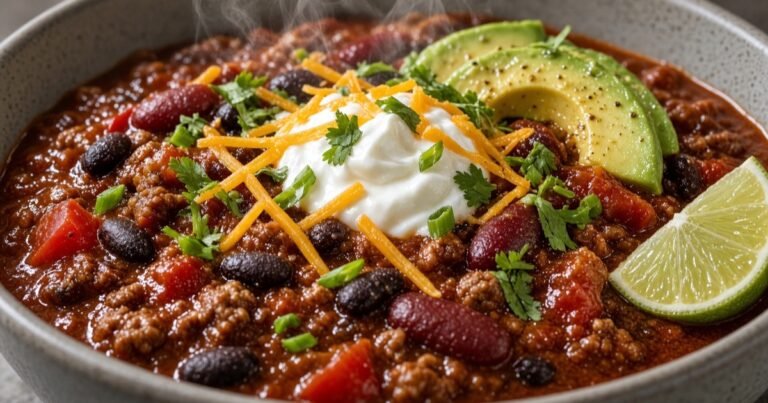
- Beef chili with the works becomes smoky chipotle turkey chili. Lean turkey, two beans, chipotles in adobo and a pinch of cocoa. About 30g protein and 11g fiber a bowl, 45 minutes.
- Takeout quesadillas become smoky black bean quesadillas. Cumin and chipotle black beans, real cheddar and sprouted grain tortillas crisped in a skillet. About 20g protein, 20 minutes.
- A loaded baked potato becomes loaded sweet potatoes with cumin black beans. Sweet potato, spiced black beans, Greek yogurt, scallions and lime. About 15g protein, 15 minutes of hands-on time.
- A pint of ice cream becomes pumpkin cottage cheese ice cream. Cottage cheese, real pumpkin, maple and warm spices, blended and then frozen. About 20g protein a serving, no machine needed.
Notice what didn’t change. For example, the chicken is still crunchy and spicy. The chili still has cheese on top. Also, the mac and cheese still pulls in strings from the spoon.
Why these comfort food swaps work: the numbers
A swap only earns its place if the math is real. So here’s what each move actually does, with rough numbers from USDA data and brand labels.
- Sour cream to Greek yogurt. Two tablespoons of sour cream run about 60 calories and under 1g of protein. The same scoop of plain nonfat Greek yogurt is about 20 calories and 3g of protein, with the same tang.
- Potato to half cauliflower. A cup of cooked cauliflower has about 30 calories against roughly 160 for potato. Going half and half keeps the texture and trims the mash by nearly a third before the butter goes in.
- Regular pasta to chickpea pasta. A 2 ounce serving of chickpea pasta has about 11g or more of protein, compared to about 7g in regular pasta, plus more fiber.
- Deep frying to oven frying. A sheet pan uses a tablespoon or two of avocado oil for a whole batch of chicken. Meanwhile, a deep fryer soaks each piece in it.
- Half the meat to beans. One can of beans adds about 25g of protein and 15g of fiber to a pot of chili for about a dollar.
Plus, every one of these is a change you’ll keep. That matters more than any single number, because comfort food shows up every week, not once.
How to swap without anyone noticing
The trick is to change the inside and leave the outside alone. If the dish is supposed to be crispy, it stays crispy. If it’s supposed to be golden on top, it still goes under the broiler. Here’s how that looks in practice.
- Go half and half first. Half cauliflower in the mash, half beans in the chili, half squash in the cheese sauce. Then push further next time if nobody notices.
- Keep the crunch. Sourdough crumbs tossed in a spoon of melted butter, a cornmeal crust, or 3 minutes under the broiler. Plus, texture is half of comfort.
- Use the good cheese, less of it. A block of sharp cheddar grated by hand melts cleaner and tastes stronger than a bag of pre-shredded, so a cup goes as far as two.
- Serve it the same way. So use the same bowls, same toppings, same Sunday. The ritual is part of the comfort, and you get to keep that too.
- Season harder than you think. Lighter dishes need more garlic, more smoke and more acid at the end, not less. A squeeze of lime or lemon wakes up everything.
For more on this, our soul food guide walks through the same idea for collard greens, catfish and black-eyed peas.
A cozy weekend menu built from swaps
Here’s how it fits together on a real weekend, when you have a little time on Saturday and none on Monday. Also, most of these reheat in a skillet or the oven in under 10 minutes.
- Saturday dinner: oven fried chicken with a cornmeal crust with roasted garlic cauliflower potato mash and a lemony green salad.
- Sunday afternoon: a big pot of smoky chipotle turkey chili on the stove, with cinnamon roasted sweet potatoes with brown butter pecans on the side for anyone who wants something sweet.
- Sunday night: butternut squash mac and cheese under the broiler, plus a bowl of pumpkin cottage cheese ice cream for dessert.
- Monday and Tuesday lunches: leftover chili over the leftover mash, or a quick smoky black bean quesadillas in a skillet.
That’s four days of comfort food, one grocery run and roughly 25 to 40g of protein at every dinner.
Frequently asked questions
What are the healthiest comfort foods?
The ones built on real food: chili full of beans, oven-baked chicken, mashed vegetables, bean quesadillas on sprouted tortillas and desserts made from fruit and protein. Keep the seasoning, change the cooking method and add protein and fiber.
How do you make comfort food healthier without losing flavor?
Keep every spice, herb and aromatic the original uses. Then bake or air fry instead of deep frying, use real block cheese in smaller amounts, swap sour cream for Greek yogurt and add beans, vegetables or chickpea pasta for protein and fiber.
Is Greek yogurt a good swap for sour cream?
Yes. Two tablespoons of plain nonfat Greek yogurt have about 20 calories and 3g of protein, while the same amount of sour cream has about 60 calories and under 1g of protein. The tang is nearly identical on chili, tacos and potatoes.
Does cauliflower mash really taste like mashed potatoes?
An all-cauliflower mash tastes like cauliflower. A half-and-half mash with roasted garlic, butter and Greek yogurt tastes like garlic mashed potatoes, and most people can’t tell the difference.
Can comfort food swaps help with weight?
They may help, mostly because the swapped versions have more protein and fiber, so you feel full on a normal portion. Think of them as food you can eat every week, not a diet.
Save this for the next cold Sunday.
This article is for general information and is not medical or nutrition advice.