Throwing out wilted spinach every Friday is not a personality trait. Shop like this instead.
How to grocery shop healthy for the whole week: plan three or four dinners, build a healthy grocery list in five lanes, and buy produce in the order you will eat it.
The short answer: A healthy grocery list starts before you leave the house. First, pick three or four dinners. Then shop in five lanes: protein, vegetables, fruit, whole grains and flavor. Finally, buy tender produce for early in the week and sturdy or frozen produce for later, so the food you buy actually gets eaten.
It’s Friday night. You open the crisper drawer and find the spinach you bought on Sunday, now a dark, soggy bag. Meanwhile, the chips are gone. Sound familiar? That is not a willpower problem. Instead, it is a shopping problem, and a smart healthy grocery list fixes most of it.
You are not alone, either. The USDA estimates that about 31% of the food supply is lost at the store and consumer level, and homes account for most of that. So the goal here is simple: buy less food you hope to eat, and more food you will actually cook on a tired Wednesday.
Why does a healthy grocery list matter so much?
A list is your plan, written down. Without one, the store makes the decisions for you. End caps, sale signs and checkout candy are all designed to catch a hungry, rushed shopper.
There is real research behind this, too. In a survey of 1,372 primary food shoppers in Pittsburgh, people who always shopped with a list had higher diet quality scores and a slightly lower BMI. That study shows a link, not proof. Still, it matches what most of us already know. When you shop with a plan, you bring home more of the good stuff.
MyPlate gives the same advice in its healthy eating on a budget guide: plan your meals for the week, write a list with staples and perishables, and shop when you are not hungry or rushed.
Step 1: Pick your dinners before you pick your food
Don’t plan seven dinners. Plan three or four, and let leftovers and one easy pantry night cover the rest. That is a plan you can keep.
Choose dinners that share ingredients, so nothing is left half used. For example, one head of cabbage can roast next to jerk chicken thighs on Monday and go into a slaw on Thursday. Likewise, one bag of red lentils makes a big pot of turmeric ginger lentil soup for two lunches.
Here is a simple week that works for a lot of families:
- Monday: Jerk chicken thighs with roasted cabbage (about 30g protein, 45 minutes, mostly hands off)
- Tuesday: Smoky sheet pan salmon with sweet potatoes and kale (about 30g protein, 35 minutes)
- Wednesday: Turmeric ginger red lentil soup (about 15g protein, 30 minutes, freezes well)
- Thursday: Leftovers night
- Friday: Masala egg scramble with warm sprouted grain toast (about 20g protein, 10 minutes)
Step 2: Build a healthy grocery list in five lanes
Next, turn those dinners into a list. Instead of writing items in random order, sort them into five lanes. That way, you can see at a glance if your week is missing protein or color.
- Protein: chicken thighs, wild salmon, pasture-raised eggs, Greek yogurt, dried or canned beans and lentils
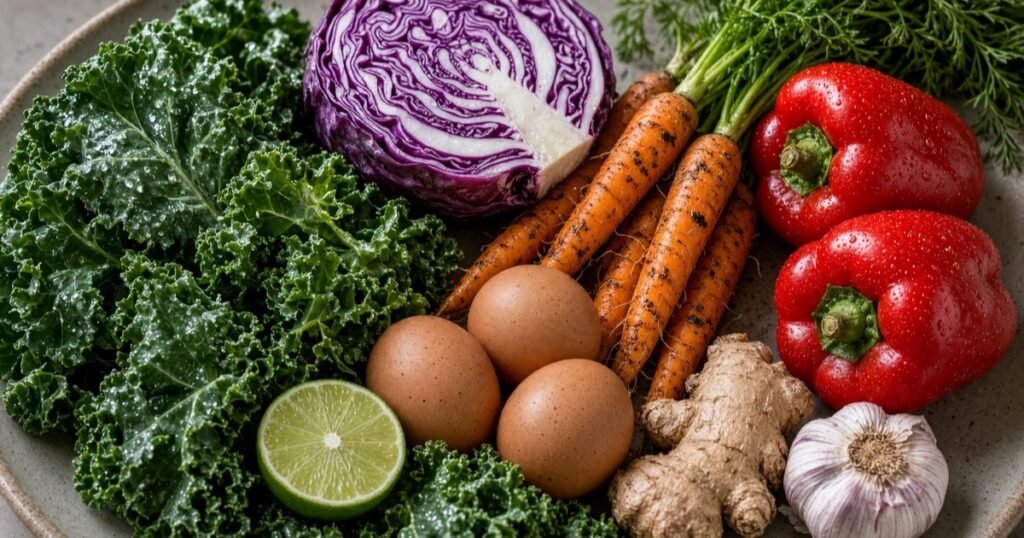
- Vegetables: one leafy green, one crunchy vegetable, one roasting vegetable, plus two bags of frozen vegetables
- Fruit: something to eat now (berries, bananas) and something that keeps (apples, oranges, frozen fruit)
- Whole grains and starches: rolled oats, brown rice or quinoa, sweet potatoes, sourdough or sprouted grain bread
- Flavor makers: garlic, onions, ginger, scallions, limes, lemons, fresh herbs, and any spice you are running low on
Also, check your fridge and cabinets before you write anything down. A quick look saves you from buying a third jar of cumin. If your shelves need a reset, start with our list of healthy pantry staples.
Step 3: Shop the store in the right order
Most of the whole foods live around the edges of the store. So start with produce, then move to the fish and meat counter, then dairy and eggs. After that, dip into the center aisles only for what is on your list, like oats, beans, canned tomatoes and spices.
A few small moves help a lot:
- Eat first. A snack with protein before you go keeps the bakery aisle quiet.
- Check the app. Many stores post digital coupons and weekly deals, so plan a dinner around what is on sale.
- Read the back, not the front. Words like “natural” or “wholesome” on the box are marketing. The ingredient list tells the real story.
- Pick the candy-free lane. That is MyPlate advice, and it is gold when kids are with you.
Step 4: Buy produce in the order you will eat it
This is the step that saves the spinach. Produce does not all last the same amount of time, so plan your week around that.
- Days 1 to 3: tender greens, berries, herbs, mushrooms, fish
- Days 4 to 6: cabbage, carrots, bell peppers, broccoli, apples, citrus, chicken you froze on day one
- Days 6 to 7: sweet potatoes, onions, frozen vegetables, frozen fruit, canned beans
Frozen produce deserves more love, too. It is picked ripe and frozen fast, so it holds on to most of its nutrients. Plus, it never wilts. That’s why two bags of frozen vegetables belong on every healthy grocery list.
Step 5: Spend 20 minutes prepping when you get home
The groceries are on the counter, and you are tired. However, 20 minutes right now makes the whole week easier. You don’t need a full meal prep afternoon. Just do the jobs that make healthy food the easy choice.
- Wash and dry greens, then store them in a container with a paper towel.
- Chop one big batch of onions, peppers and carrots for the first two dinners.
- Cook a pot of rice or quinoa, or boil a half dozen eggs.
- Portion chicken or fish for later in the week and freeze it.
- Put fruit on the counter where you can see it.
As a result, Tuesday night feels like assembly, not cooking from scratch. And when the week does fall apart, you still have a plan B in the freezer.
How to keep your healthy grocery list on budget
Eating well does not have to cost more. In fact, beans, lentils, oats, cabbage, carrots, eggs and frozen vegetables are some of the cheapest foods in the store, and they are also some of the most filling.
So build each week around two or three of those, then add one splurge you love, like wild salmon or fresh berries. Buy store brands for basics, and buy meat in family packs to split and freeze. For a full week of real food on a budget, see our guide to clean eating on a budget.
Frequently asked questions
What should be on a healthy grocery list?
Build it in five lanes: two or three proteins, a mix of fresh and frozen vegetables, sturdy fruit, one or two whole grains or starches, and a few flavor makers like garlic, onions, citrus and spices. Then add pantry refills only when you are low.
How do you keep produce from going bad before you eat it?
Buy tender produce like berries and greens for the first half of the week, and sturdy produce like cabbage, carrots, sweet potatoes and apples for the second half. Frozen vegetables cover the last few days, so nothing turns to slime.
Is frozen produce as healthy as fresh?
Yes, it is a great choice. Frozen vegetables and fruit are picked ripe and frozen quickly, so they keep most of their nutrients. Choose bags with just the vegetable or fruit and nothing added.
How often should you grocery shop to eat healthy?
For most busy households, one main trip a week plus one quick midweek top-up for fresh greens and fruit works well. Fewer trips also means fewer impulse buys.
Save this for your next Sunday reset, and send it to the friend whose spinach is also dying in the drawer.
This article is for general information and is not medical or nutrition advice.