Nothing in the fridge? These 15 pantry staples still make a real dinner.
The 15 healthy pantry staples that turn an empty fridge into a real dinner: beans and lentils, whole grains, canned wild fish, tomatoes, coconut milk, good oils and spices.
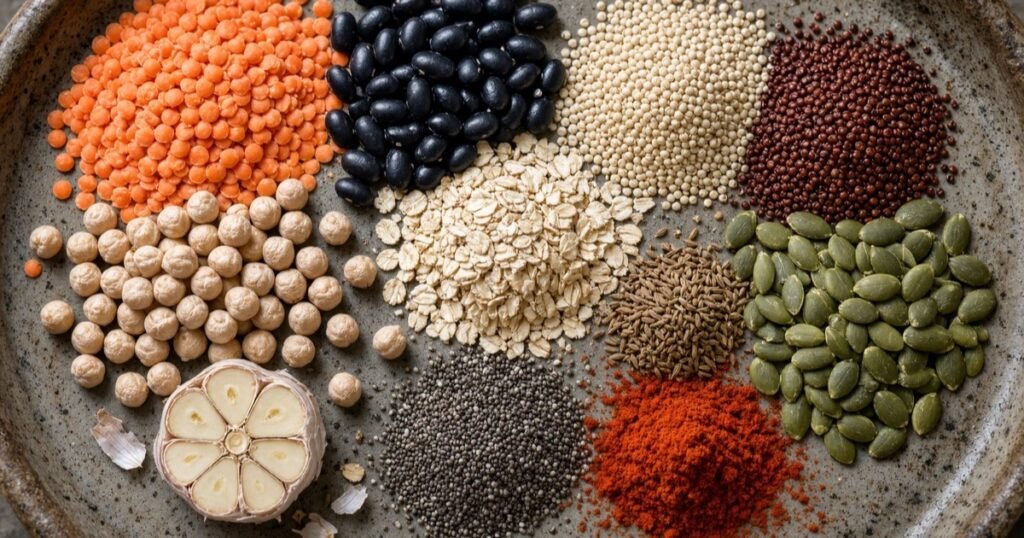
The short answer: The best healthy pantry staples are the ones that give you protein, fiber and flavor without a trip to the store. So think beans and lentils, rolled oats and whole grains, canned wild fish, canned tomatoes, coconut milk, good oils and a real spice shelf. With those healthy pantry staples stocked, you can always make a warm, real dinner in about 30 minutes.
It’s 7 PM on a Tuesday. You open the fridge and find half a lemon, one egg and a sad bag of spinach. Of course, the takeout app is already calling your name. However, your pantry might be holding a full dinner, if it’s stocked with the right things.
That’s the whole idea here. Instead of a perfect kitchen, you need a short list of foods that last for months and cook fast. Also, every staple below works hard. Each one adds protein, fiber or big flavor, and most of them cost less than a single delivery fee.
What are the healthiest pantry staples to always keep stocked?
Here is the short list, 15 staples in five shelves. You do not need all of them on day one. Instead, start with the beans and the spices, then add a few more each grocery trip.
- The protein shelf: red lentils, chickpeas, black beans
- The grain shelf: rolled oats, quinoa, brown rice
- The can shelf: wild salmon, sardines, crushed tomatoes, full-fat coconut milk
- The flavor shelf: extra virgin olive oil and avocado oil, a core spice set, apple cider vinegar
- The snack shelf: pumpkin seeds and chia seeds, almond or peanut butter
Notice what is missing. There are no boxed meals and no packets. Every item is a whole food or close to it, so you decide what goes in your dinner.
Beans and lentils: the hardest working shelf
If you only stock one shelf, make it this one. For example, one cup of cooked lentils has about 18g of protein and almost 16g of fiber. Meanwhile, one cup of cooked chickpeas has about 14.5g of protein and 12.5g of fiber. That is a lot of staying power for well under a dollar.
Red lentils are the fastest. They cook down in about 20 minutes with no soaking, so they are perfect for soups and curries. Chickpeas and black beans come canned and ready to go. Plus, dried beans keep their best quality for about 1 to 2 years, so a bag in the back of the cabinet is never wasted.
Pulses like these are also tied to steadier blood sugar and better heart health over time, according to Harvard’s Nutrition Source. So beans are not filler. Instead, they are the base of the whole pantry. Want more ideas? Our guide to high-fiber foods breaks down the cheapest options by the serving.
Quick tip: buy no-salt-added cans when you see them, and rinse the beans in a strainer. As a result, you wash off some of the extra sodium and you control the salt yourself.
Whole grains that actually last
Next, you need something warm and filling to sit under the beans. These three grains cover breakfast, lunch and dinner.
- Rolled oats: about 5g of protein per half cup dry. They keep about 18 to 24 months sealed. Use them for baked oatmeal, overnight oats or as a binder in turkey meatballs.
- Quinoa: cooks in about 15 minutes and has around 8g of protein per cooked cup. Rinse it first so it does not taste bitter.
- Brown rice: the slowest of the three, but nutty and filling. Because the bran has natural oils, it keeps about 6 to 12 months in the pantry. So store a big bag in the freezer instead.
Also, cook a double batch on Sunday. Then you can reheat it in a skillet with a splash of water all week.
Canned fish, tomatoes and coconut milk
Cans get a bad reputation, but a few of them belong in every healthy kitchen. Wild salmon and sardines are the big ones. For example, canned sardines with their soft bones have about 300mg of calcium per 3.5 ounce serving. Also, they are one of the richest fish sources of omega-3 fats, and they tend to be low in mercury.
Canned wild salmon works the same way. In fact, the soft bones give it far more calcium than a fresh fillet. Just choose fish packed in water or olive oil, and look for low-sodium labels.
Then add two flavor cans. First, crushed tomatoes, which turn into a sauce in ten minutes with garlic and oregano. Second, full-fat coconut milk, which makes curries and soups rich and silky without heavy cream. Together, those four cans can carry a week of dinners.
The flavor shelf: spices, oils and acids
This is the shelf that keeps healthy food from tasting like a punishment. A can of chickpeas with salt is sad. However, a can of chickpeas with cumin, smoked paprika, garlic and lime is dinner.
- Oils: extra virgin olive oil for most cooking and dressings, avocado oil for high heat, plus a jar of ghee or coconut oil if you like them.
- The core spice set: cumin, smoked paprika, chili powder, garlic powder, onion powder, turmeric, cinnamon, oregano and red pepper flakes.
- Big-flavor extras: chipotle powder, curry powder, allspice and dried thyme for Caribbean cooking, and coconut aminos for a soy-sauce flavor.
- Acids: apple cider vinegar and red wine vinegar. A splash at the end wakes up any pot of beans.
Also keep garlic, onions and sweet potatoes in a cool, dark basket. They are not technically shelf items, but they last for weeks and they start almost every good meal.
Nuts, seeds and the sweet stuff
Finally, you need a few things for snacks and breakfast. Pumpkin seeds add crunch and about 8g of protein per ounce. Chia seeds thicken oatmeal and smoothies, and they add fiber too. Meanwhile, a jar of almond or peanut butter, with just nuts and salt on the label, turns an apple into a real snack.
For sweetness, keep raw honey or pure maple syrup and a little cinnamon. So when the 3 PM craving hits, you have a real option ready.
How to turn healthy pantry staples into dinner
Here is where it all pays off. Each of these recipes is built mostly from the healthy pantry staples above, plus one or two fresh things.
- Turmeric Ginger Red Lentil Soup: red lentils, coconut milk and spices, about 40 minutes.
- Trini Curry Channa: chickpeas, curry powder and green seasoning, about 35 minutes.
- Jamaican Rice and Peas: rice, kidney beans, coconut milk and thyme, about 45 minutes.
- Greek Lemon Chickpea Soup: chickpeas, garlic, oregano and lemon, about 35 minutes.
- Cinnamon Apple Baked Oatmeal: rolled oats, cinnamon and maple for a week of breakfasts.
Also, a stocked pantry is the easiest way to save money. If you are watching the grocery bill, our clean eating on a budget plan uses these same staples for a full week.
Frequently asked questions
What are the healthiest pantry staples to keep stocked?
Start with beans and lentils, rolled oats, quinoa or brown rice, canned wild salmon and sardines, canned tomatoes, coconut milk, extra virgin olive oil, a solid spice shelf, vinegar, and nuts and seeds. Together they cover protein, fiber, healthy fat and flavor.
Are canned beans as healthy as dried beans?
Yes, they are a great option. Canned beans keep most of their protein and fiber. Choose no-salt-added cans when you can, and rinse them to wash off some of the extra sodium.
How long do pantry staples last?
Dried beans keep their best quality for about 1 to 2 years, and rolled oats for about 18 to 24 months. Brown rice is shorter, about 6 to 12 months, because the natural oils in the bran can go stale. Keep everything cool, dry and sealed.
How do you make pantry meals taste good?
Build flavor in layers. Bloom spices like cumin and smoked paprika in olive oil, add garlic and onion, then finish with something bright like lime, vinegar or fresh herbs. That’s what turns a can of chickpeas into dinner.
Save this list for your next grocery run. Comment or message PANTRY and we’ll send you the printable pantry checklist with all 15 staples.
This article is for general information and is not medical or nutrition advice.