

Iron in disguise: dessert-level foods that help close the most common nutrient gap in women.
Iron is one of the most common nutrient gaps in women. These seven iron rich foods taste like a treat, each dish links to a full recipe, and the vitamin C pairing trick makes every milligram count.
The short answer
Iron rich foods don’t have to taste like liver and boiled greens. Dark chocolate, blackstrap molasses, pumpkin seeds, tahini, oysters and a smoky bowl of beef and bean chili all deliver real iron. Most of them taste like a treat. Women aged 19 to 50 need about 18 mg a day, more than double what men need. That’s why iron is one of the most common nutrient gaps in women.
On this page
It’s 3 PM. You’ve been tired for weeks, more hair seems to land in the shower drain, and the gummies on the counter aren’t doing much. Low iron is one possibility. It’s a conversation for your doctor, not a self-diagnosis. In the meantime, though, your kitchen can quietly help. The iron rich foods below taste like dessert.
The numbers explain why this matters. According to the World Health Organization, about 30 percent of non-pregnant women aged 15 to 49 worldwide had anemia in 2019. In the United States, roughly 18 percent of women aged 20 to 45 are iron deficient. A 2023 study in JAMA found almost 40 percent of girls and young women aged 12 to 21 were low. So if you feel drained, you’re in a very large club.
Why women run low on iron
Iron builds hemoglobin, the part of your red blood cells that carries oxygen. Lose blood, and you lose iron with it. That’s why monthly periods, especially heavy ones, are the biggest reason women fall behind. Pregnancy raises the need even higher, to 27 mg a day. Your body is building a whole new blood supply.
Food habits matter too. Plant-heavy eating, coffee or tea with every meal, and skipping red meat and seafood all lower what you actually absorb. The NIH Office of Dietary Supplements sets the daily target at 18 mg for women 19 to 50 and 8 mg after 51, when periods stop.
Heme vs non-heme: what your body actually absorbs
Not all iron counts the same. Heme iron comes from meat, poultry and seafood, and your body absorbs it well. Non-heme iron comes from plants, seeds, chocolate and molasses. It’s more sensitive to what’s on the plate next to it. On a mixed diet with some meat, the NIH estimates you absorb about 14 to 18 percent of the iron you eat. On a vegetarian diet, it’s closer to 5 to 12 percent.
That’s not a reason to skip plant iron. Instead, it’s a reason to pair it well. Vitamin C turns non-heme iron into a form your body takes up more easily. Also, a little meat or seafood at the same meal helps the plant iron along. Polyphenols in coffee and tea, and large doses of calcium, push the other way.
7 iron rich foods that taste like dessert
Here’s the fun part. Every item below is a real source of iron. Every dish links to a full recipe with a card you can print. The milligram numbers come from USDA and NIH data and are rounded.
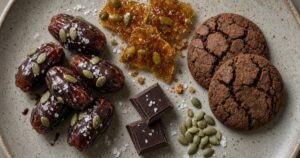
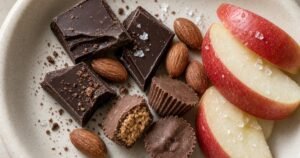
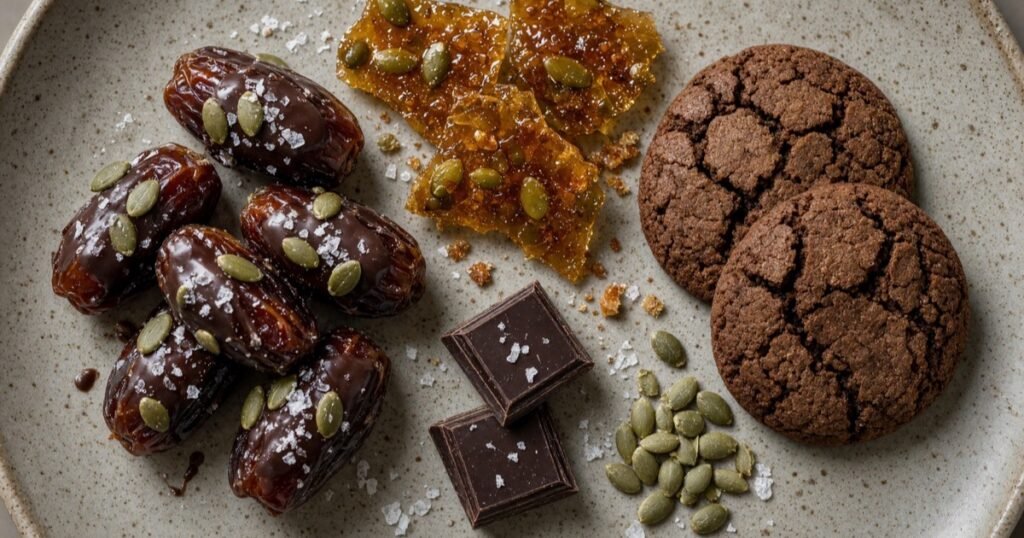
- Dark chocolate. About 2 mg per ounce of 45 to 69 percent chocolate, and around 3 mg per ounce at 70 percent and up. Try our dark chocolate tahini stuffed dates: 15 minutes, no oven, about 2 to 3 mg for two dates.
- Blackstrap molasses. The darkest molasses, with many labels listing about 20 percent of the Daily Value for iron per tablespoon. Our chewy blackstrap molasses ginger cookies put a third of a cup into 16 cookies, so each one brings close to 1 mg.
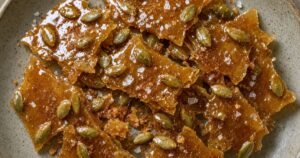
- Pumpkin seeds. About 2.5 mg per ounce, plus magnesium and zinc. Maple pumpkin seed brittle with cinnamon and cayenne turns them into a five-ingredient candy that snaps.
- Tahini. Roasted sesame paste carries about 1.3 mg per tablespoon, which is why it fills the stuffed dates above. Also, swirl it into oatmeal or drizzle it over roasted squash.
- Oysters. The heavyweight. The NIH lists 8 mg in 3 ounces of cooked eastern oysters, close to half a day’s need. A half dozen at happy hour with lemon is one of the easiest iron wins there is.
- Beef and black beans together. Lean beef brings about 2.5 mg per 3 ounces and black beans about 1.8 mg per half cup. Plus, the heme iron helps the bean iron absorb. Our dark chocolate beef and black bean chili stirs cocoa into the pot for about 5 mg a bowl. The vegan lentil version on the same page is nearly as rich.
- Spinach, cooked down. A half cup of cooked spinach has about 3 mg, far more than a raw salad. Cooking shrinks a pound into a few cups. Baked spinach artichoke dip with Greek yogurt hides a full pound in one bubbling dish. The pepper strips you dip with it bring the vitamin C.
Honorable mentions
Lentils deserve an honorable mention at about 3 mg per half cup. So do sardines, which bring heme iron plus calcium and omega-3s. Cooking tomato sauces and chili in a cast iron pan adds a small amount of iron too.
The pairing trick that makes plant iron count
You can double the value of the same plate with a few habits. None of them cost money.
- Add vitamin C to the meal. Red bell pepper strips with the dip, orange slices with the cookies, lime in the chili, strawberries beside the dates.
- Move coffee and tea. Enjoy them an hour before or after meals instead of with them.
- Mix heme and non-heme. A little beef in the bean chili or sardines on a lentil salad helps the plant iron absorb.
- Keep calcium supplements separate. Take them at a different time from your iron-rich meals.
- Soak or sprout beans and seeds. That reduces phytates, the compounds in whole grains and legumes that hold onto minerals.
How to fit it into a real week
You don’t need a meal plan, just a few anchors. Make the chili on Sunday and eat it twice. Keep a jar of brittle on your desk for the 3 PM slump. Stuff a dozen dates on Monday night and keep them in the fridge for dessert all week. Then bake the cookies on the weekend and freeze half the dough balls. Save the dip for the next game day, with a rainbow of peppers on the side.
If hair shedding is part of why you’re reading, our guide to foods for thicker hair covers the protein and mineral side, and our earlier piece on matcha, iron and hair loss explains why green tea with breakfast may be working against you.
When food isn’t enough
Iron rich foods are a great daily habit, but they can’t fix a diagnosed deficiency on their own. Feeling unusually tired, short of breath on the stairs, or cold in your hands and feet? Noticing pale skin, brittle nails or more hair in the brush? Ask your doctor for a simple blood test. Ferritin and hemoglobin tell the story in a few minutes.
One more thing: don’t start a high-dose iron supplement on a guess. Too much iron causes stomach trouble and can build up in the body. So testing first protects you both ways. Food, on the other hand, is hard to overdo, which is why starting there makes sense.
Frequently asked questions
Can you get enough iron from food alone?
Many women can, especially with heme sources like beef, oysters and sardines plus plant iron paired with vitamin C. Women with heavy periods, pregnancy or a diagnosed deficiency often need more than food gives. That’s a conversation for your doctor.
Does dark chocolate really have iron?
Yes. The NIH lists about 2 mg in an ounce of 45 to 69 percent dark chocolate, and darker bars have more. It’s non-heme iron, so pair it with fruit and keep the portion to an ounce or two.
Does coffee block iron?
Coffee and tea contain polyphenols that cut non-heme iron absorption when you drink them with a meal. Having them an hour before or after eating helps. A squeeze of citrus or a side of fruit with the meal helps even more.
Should I just take an iron supplement?
Not without a blood test. Too much iron can cause stomach upset and, over time, real problems. The NIH sets the upper limit for adults at 45 mg a day. Ask your doctor to check ferritin and hemoglobin first.
Save this for the next tired week.
This article is for general information and is not medical or nutrition advice.
Free dinner list
The drained-day dinner list
Thirty dinners for your worst days, plus one new recipe every week. Free, and you can unsubscribe anytime.
Comment TIRED on any of our Instagram posts and we'll send it to you.