






Why you crash at 3 p.m. (and the 4 tiny plate moves that stop it)
You ate lunch, and you're still foggy and hunting for sugar at 3 p.m. Here are 4 tiny plate moves, one short walk and a kinder bedtime for steadier energy.

The short answer
To balance blood sugar naturally, build each meal around protein and fiber, eat your vegetables and protein before your starch, add a little acid like vinegar or citrus, and walk for 10 minutes after you eat. Then guard your sleep. These are gentle nudges, and normal rises after meals are part of a healthy body.
On this page
- What does it mean to balance blood sugar na...
- What the research actually says
- How do you stop blood sugar spikes and cras...
- Start with a savory breakfast
- Walk for 10 minutes after you eat
- Sleep, stress and your cycle shape your blo...
- What a steady day of eating looks like
- When to talk to your doctor
- Keep reading
- Frequently asked questions
- The bottom line
This post has affiliate links. If you buy through them, Clean Fit Fab may earn a small commission at no extra cost to you.
It’s 3 p.m. You ate lunch. Still, you’re starving, a little foggy, and digging through your bag for something sweet. So you wonder what’s wrong with your willpower. Nothing is. Your lunch simply burned fast, and now your body is asking for more fuel.
That afternoon dip is one of the most common things women describe, and it’s rarely about discipline. This guide shows you how to balance blood sugar naturally with four tiny plate moves, one short walk and a kinder bedtime. You’ll also get an honest look at what the research says, and what’s just noise on your feed.
What does it mean to balance blood sugar naturally?
Every time you eat carbohydrates, your body breaks them down into glucose. Glucose moves into your blood, and insulin helps carry it into your cells for energy. So a rise after a meal is normal. It means the system is working.
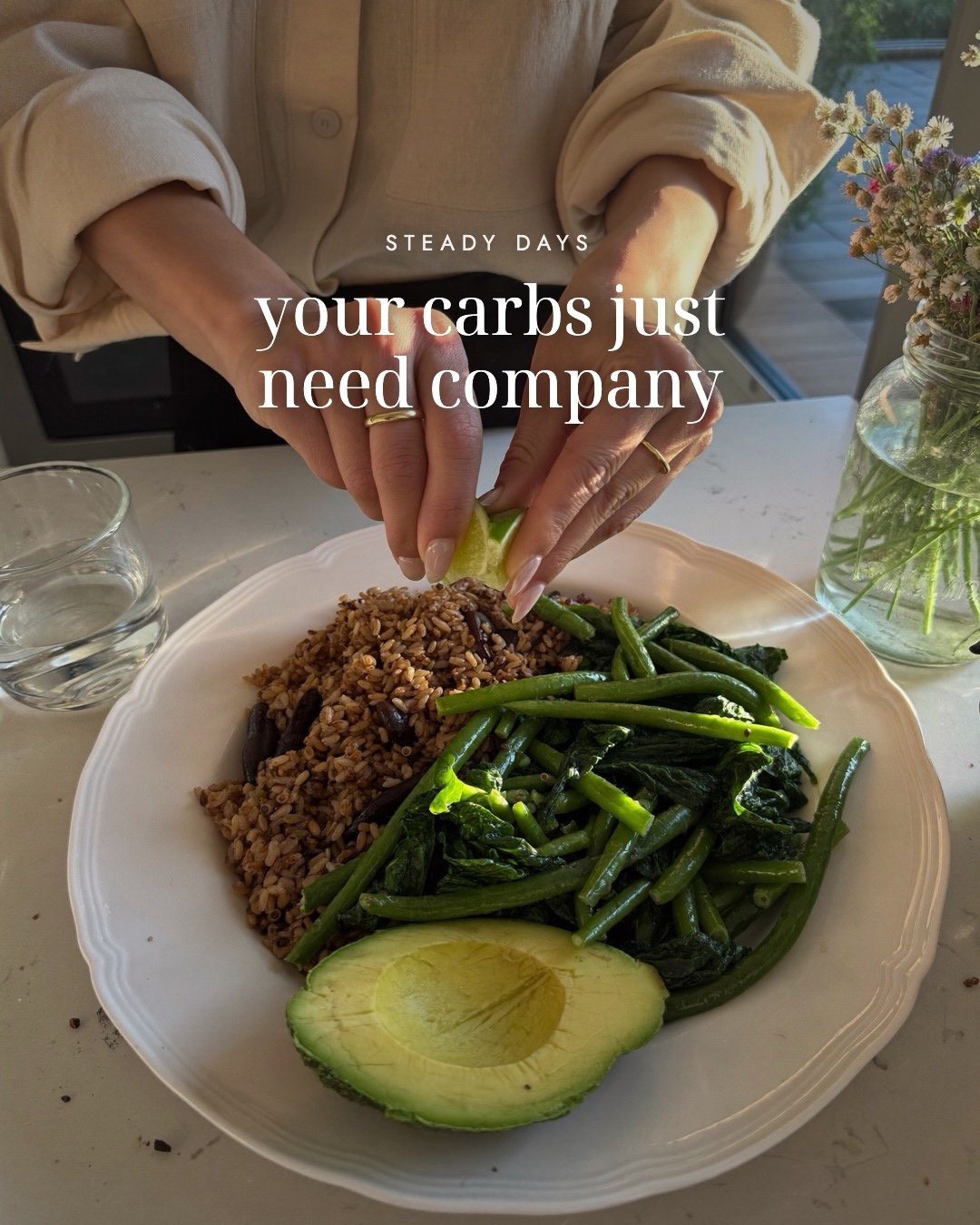
However, the shape of that rise matters for how you feel. A meal of mostly fast carbs can send glucose up quickly. Then it can drop quickly too, and that drop is the part that feels like 3 p.m. The Harvard Nutrition Source explains that fiber, fat and acid all slow how fast a meal turns into sugar.
To balance blood sugar naturally is to soften that curve with food, movement and rest. You are not chasing a flat line. Instead, you’re aiming for gentler rises, softer landings and energy that lasts until your next meal.
- Fast and sharp: a sweet coffee and a pastry alone, a big bowl of white pasta, candy on an empty stomach.
- Slow and steady: eggs with beans and greens, chicken with roasted vegetables and rice, yogurt with nuts and berries.
What the research actually says
Blood sugar content is everywhere right now, and some of it is far ahead of the science. So here is the honest version.
- What’s well supported: eating enough fiber and protein, moving after meals and sleeping well are all linked with steadier glucose. For example, a 2022 review in the journal Sports Medicine found that even a few minutes of light walking after eating lowered the rise in blood sugar compared with sitting.
- What’s promising but small: food order and vinegar. In a 2015 study in Diabetes Care, 11 adults with type 2 diabetes ate the same meal twice. When the vegetables and protein came first, glucose was about 29 percent lower at 30 minutes and 37 percent lower at 60 minutes. That’s a tiny study, yet later trials point the same way.
- What’s overhyped: the idea that every rise is damage. In healthy people, glucose goes up after meals and comes back down. As of 2026, glucose sensors are sold over the counter in the U.S., but there’s little evidence that most women without diabetes need to track every bite.
- What really matters: more than 1 in 3 American adults has prediabetes, and more than 8 in 10 of them don’t know it, according to the CDC. So a simple blood test at your yearly checkup tells you more than any trend.
Who should be careful? If you’re pregnant, have diabetes or take medication that affects blood sugar, talk with your doctor before you change how you eat. These habits sit beside medical care. They never replace it.
How do you stop blood sugar spikes and crashes? 4 tiny plate moves
You don’t need a strict diet. Instead, you need four small moves you can use at any table, including your mother’s, a restaurant’s and your own on a tired Tuesday.
1. Anchor every meal with protein
Protein digests slowly, and it helps you feel full. So start each plate by finding the protein. Many dietitians suggest roughly 20 to 30 grams per meal. That looks like two or three eggs with beans, a palm of chicken or fish, or a cup of Greek yogurt or cottage cheese. Our guide to how much protein you need walks through the numbers.
2. Put fiber on half the plate
Fiber slows digestion, so glucose reaches your blood more gradually. Women are advised to get about 25 grams a day, yet more than 90 percent fall short, according to the Dietary Guidelines for Americans. That’s why this move is so powerful. Fill half your plate with vegetables, beans, lentils or fruit with the skin on. This list of high-fiber foods makes it easy.
3. Eat your vegetables and protein first
Same plate, different order. Begin with the salad, the greens or the chicken, and then move on to the rice, bread or pasta. As a result, the fiber and protein are already at work when the starch arrives. It costs nothing, and you still eat everything you love.
4. Dress your carbs
Carbs are not the enemy. They’re just better with company. So add fat, acid or both. Toss potatoes in olive oil and lemon. Squeeze lime over rice and beans. Whisk a quick dressing of olive oil, apple cider vinegar, garlic and mustard for your salad. A 2017 review of clinical trials found that vinegar with a meal modestly lowered the glucose and insulin rise afterward.
A note on vinegar drinks: if you’d like to try one, stir 1 to 2 teaspoons into a tall glass of water and sip it with your meal. Never drink it straight, since the acid is hard on teeth and throats. Also, skip it if you have reflux or take diabetes medication, unless your doctor says it’s fine. Vinegar on your salad counts just as much.
Start with a savory breakfast
Breakfast sets the tone. A sweet, low-protein start can leave you hungry again by mid-morning. Meanwhile, a savory plate with protein, fiber and fat tends to carry you to lunch.
Our savory breakfast plate is the template: smoky cumin black beans, garlicky greens, two jammy eggs and chili lime avocado on sourdough. It has about 27 grams of protein and 15 grams of fiber, and it takes 15 minutes. If you love something sweet in the morning, keep it. Just add protein first, like these high-protein breakfast ideas.
Here’s the soul part. A warm plate you sat down to eat tells your body the day is safe and there is enough. That feeling is steadying too.
Walk for 10 minutes after you eat
Your muscles use glucose when they move. So a short walk after a meal gives that glucose somewhere to go. In addition, the research is encouraging: even two to five minutes of light walking after eating made a measurable difference in the 2022 review, and 10 to 15 minutes is a lovely goal.

- After dinner: loop the block with your partner, your kids or a podcast.
- At work: take the stairs and one lap of the building after lunch.
- At home on a cold day: fold laundry, tidy the kitchen or use a slim walking pad by the window.
- With little ones: a stroller walk or a living room dance party counts.
Timing helps. Aim to start within about 30 minutes of finishing your meal. Still, any walk beats no walk, so don’t let perfect timing stop you.
Sleep, stress and your cycle shape your blood sugar too
Food is only part of the picture. In a small 2010 study in the Journal of Clinical Endocrinology and Metabolism, a single night of about four hours of sleep made healthy adults noticeably less sensitive to insulin the next day. So if you crave sugar after a rough night, that’s biology, not weakness.

Stress works in a similar way. When you’re under pressure, your body releases cortisol, which nudges glucose up so you have quick energy. Therefore, a few slow breaths before you eat, or five quiet minutes outside, is a real blood sugar habit.
Many women also notice stronger cravings and hunger in the week before their period. That’s common. So add a little more protein and slow carbs in that week instead of fighting yourself. For better nights, start with our sleep tips for women.
A word on fiber supplements: food comes first. If you still fall short, plain psyllium husk stirred into a full glass of water is a simple option. Look for third-party testing (USP or NSF) on any supplement, start with a small amount, and talk with your doctor first, especially if you’re pregnant, breastfeeding or on medication.
What a steady day of eating looks like
Here’s one sample day that uses every move in this guide. Treat it as a picture, not a prescription, and change it to fit your culture, your budget and your appetite.
- Breakfast: the savory breakfast plate with black beans, greens and jammy eggs. About 27g protein, 15 minutes.
- Lunch: lemon garlic tuna white bean salad over greens, then a 10-minute walk. About 35g protein, 5 minutes.
- Afternoon snack: a Greek yogurt protein bowl with berries and nuts, before the 3 p.m. dip arrives.
- Dinner: turkey keema with peas and ginger. Eat the vegetables first, then enjoy the rice, and finish with a walk around the block.
Notice what’s missing: guilt. There’s bread at breakfast and rice at dinner. The carbs simply have company now.
When to talk to your doctor
Habits help, but they can’t tell you your numbers. So ask your doctor about a fasting glucose or A1C test if you have a family history of diabetes, had gestational diabetes, have PCOS, or notice any of the signs below.
- Being very thirsty or needing to pee much more than usual
- Blurry vision, or cuts that are slow to mend
- Feeling shaky, sweaty or confused between meals
- Tiredness that doesn’t lift with sleep and regular meals
Checking is an act of care, not a verdict. And if your numbers come back high, these same plate moves are usually part of the plan your care team builds with you.
Keep reading
Every guide in our metabolic health series, from food order to walking after meals, in one place:
Frequently asked questions
What is the best way to balance blood sugar naturally?
Start with your plate. Add protein to every meal, fill half the plate with fiber-rich plants, eat the vegetables and protein before the starch, and take a 10-minute walk after you eat. Then protect your sleep. Small, steady habits tend to matter more than strict rules.
Is it normal for blood sugar to spike after eating?
Yes. Blood sugar rises after every meal and then comes back down, and that’s healthy. For people without diabetes, the CDC lists a fasting level under 100 mg/dL as normal. The goal is gentler rises and softer landings, not a flat line.
What should I eat first to avoid a blood sugar spike?
Try the vegetables and protein first and the starch last. In a small 2015 study in Diabetes Care, that order led to lower glucose after the meal than eating the same foods with the carbohydrates first.
Does apple cider vinegar lower blood sugar?
A little, and only for some people. A 2017 research review found vinegar with a meal modestly lowered the glucose and insulin rise afterward. It’s a small nudge, never a treatment. Always dilute it, and skip it if you have reflux or take diabetes medication unless your doctor agrees.
Why do I crash at 3 p.m. even after I eat lunch?
Often lunch was light on protein and fiber and heavy on fast carbs, so energy rose quickly and then dipped. A short night of sleep, too little water and a long stretch of sitting can add to it. A balanced plate and a short walk may help.
The bottom line
You are not broken, and you don’t need a perfect diet. To balance blood sugar naturally, give your carbs some company, walk a little after you eat and let yourself rest. Start with one move at your very next meal, because steady energy is built one kind plate at a time.
Save this guide for your next 3 p.m. slump.
This article is for general information and is not medical or nutrition advice.
Free dinner list
The drained-day dinner list
Thirty dinners for your worst days, plus one new recipe every week. Free, and you can unsubscribe anytime.
Comment TIRED on any of our Instagram posts and we'll send it to you.