





Friendsgiving doesn’t have to wreck your week: how to host a cozy one on a weeknight
The group chat said yes and now it's at your place. Here's how to host a cozy Friendsgiving on a weeknight: a potluck map, a 3-day timeline and a table that feels special without the stress.
The short answer
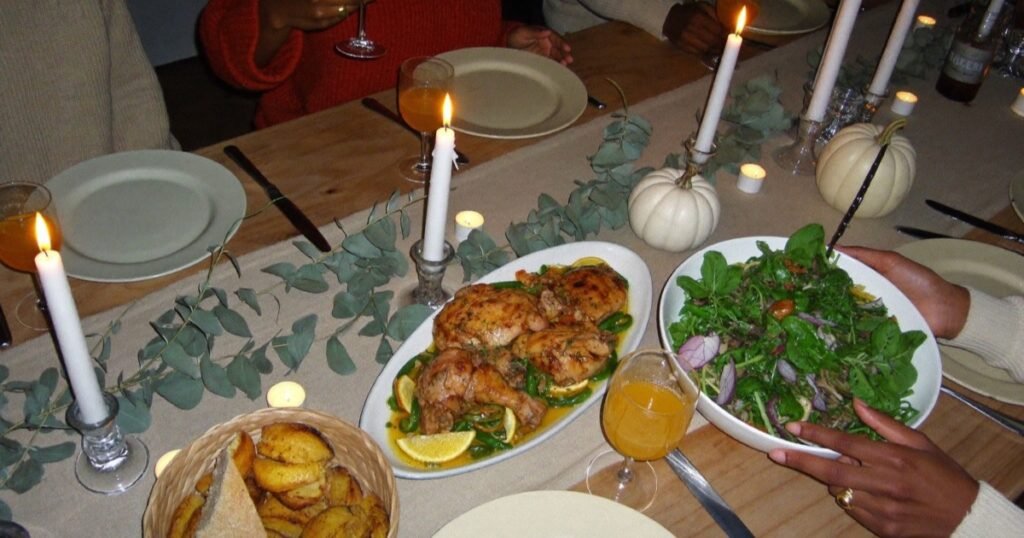
Here’s how to host Friendsgiving on a weeknight without wrecking your week: make one main dish ahead, let friends bring the rest from a simple potluck map, set the table the night before and plan for leftovers. Spread the work over three short evenings, so on the night itself you get to sit down too.
On this page
- How to host Friendsgiving: what makes it di...
- How do you plan a Friendsgiving potluck tha...
- What’s a simple 3-day Friendsgiving t...
- What should you serve if you’re not m...
- How do you make the table feel special on a...
- How do you enjoy your own party as the host?
- What about leftovers and the next morning?
- Frequently asked questions
It’s Tuesday night and the group chat is buzzing. Someone suggested Friendsgiving, everyone said yes, and somehow it’s at your place. Now you’re picturing a full turkey, nine sides and a table that looks like a magazine, all after work and bedtime.
Here’s the good news. The best Friendsgiving isn’t the most impressive one. It’s the one where the host is relaxed, the food is warm and everyone lingers. So this guide to how to host Friendsgiving is built around one goal: you, sitting at your own table, actually enjoying your friends.
How to host Friendsgiving: what makes it different from Thanksgiving?
Thanksgiving comes with tradition and expectations. Friendsgiving comes with permission. There’s no rule that you need a whole turkey or a formal table, and nobody’s grandmother is grading the stuffing.
That freedom is the whole point. Friendsgiving can be on a Tuesday, on the living room floor or built around one great dish and a pile of candles. In other words, you get to decide what kind of evening you want, then plan backward from that.
Knowing how to host Friendsgiving well starts with three quick questions. How many people fit comfortably? What’s one dish you’d love to make? And what time do people need to leave on a work night? Those answers shape everything else.
How do you plan a Friendsgiving potluck that actually works?
Most potluck chaos comes from five people bringing mac and cheese. A simple potluck map fixes that. Share it in the group chat as soon as the date is set, then let friends claim a slot.

- You: the main dish and the drinks.
- Two friends: a warm side each (one roasted vegetable, one starch).
- One friend: a big salad or a fresh starter.
- Your baker friend: dessert.
- The late arrival: bread, ice and a playlist.
- Anyone who can’t cook: flowers, candles or cleanup duty.
Ask everyone to bring their dish ready to serve, with its own spoon. That one sentence saves your oven and your sink. For a fresh, easy starter idea, our 5-minute veggie starter salad travels well and wakes up a heavy table.
What’s a simple 3-day Friendsgiving timeline?
Spreading the work over three evenings turns one exhausting day into three easy ones. Each block takes about 30 to 45 minutes.
Two nights before: shop and plan
Confirm the potluck map, then shop for your main and drinks. Pull out serving dishes and label each one with a sticky note for who’s bringing what. As a result, you won’t be hunting for a platter while guests arrive.
The night before: cook ahead and set the table
Make anything that tastes better the next day, like a braise, a chili or a marinade. For example, our Greek lemon garlic chicken thighs can marinate overnight and roast in under an hour. Then set the table, so tomorrow’s mess never touches it.
The day of: reheat, light and relax
After work, roast or reheat the main, chill the drinks and light the candles. Leave the last 20 minutes free for a shower and a glass of water. You’ll greet people feeling like a guest at your own party.
What should you serve if you’re not making a whole turkey?
A whole bird is a lot for a weeknight. Instead, choose one main that feeds a crowd and holds well. Good options include roasted chicken thighs, turkey breast, a big pot of chili or a sheet-pan salmon.
If you do cook poultry, food safety still matters. The USDA says cooked turkey should reach 165°F in the thickest part, and leftovers belong in the fridge within two hours. You can read the full guidance from the USDA Food Safety and Inspection Service.
Want the meal to feel lighter? Serve the salad first. Eating vegetables before starches is a small habit we explain in eat your salad first, and it fits a long, cozy dinner perfectly. For dessert, our cranberry bliss bars can be made two days ahead.
How do you make the table feel special on a small budget?
Pinterest-worthy doesn’t have to mean expensive. Warm light and a few natural pieces do most of the work.
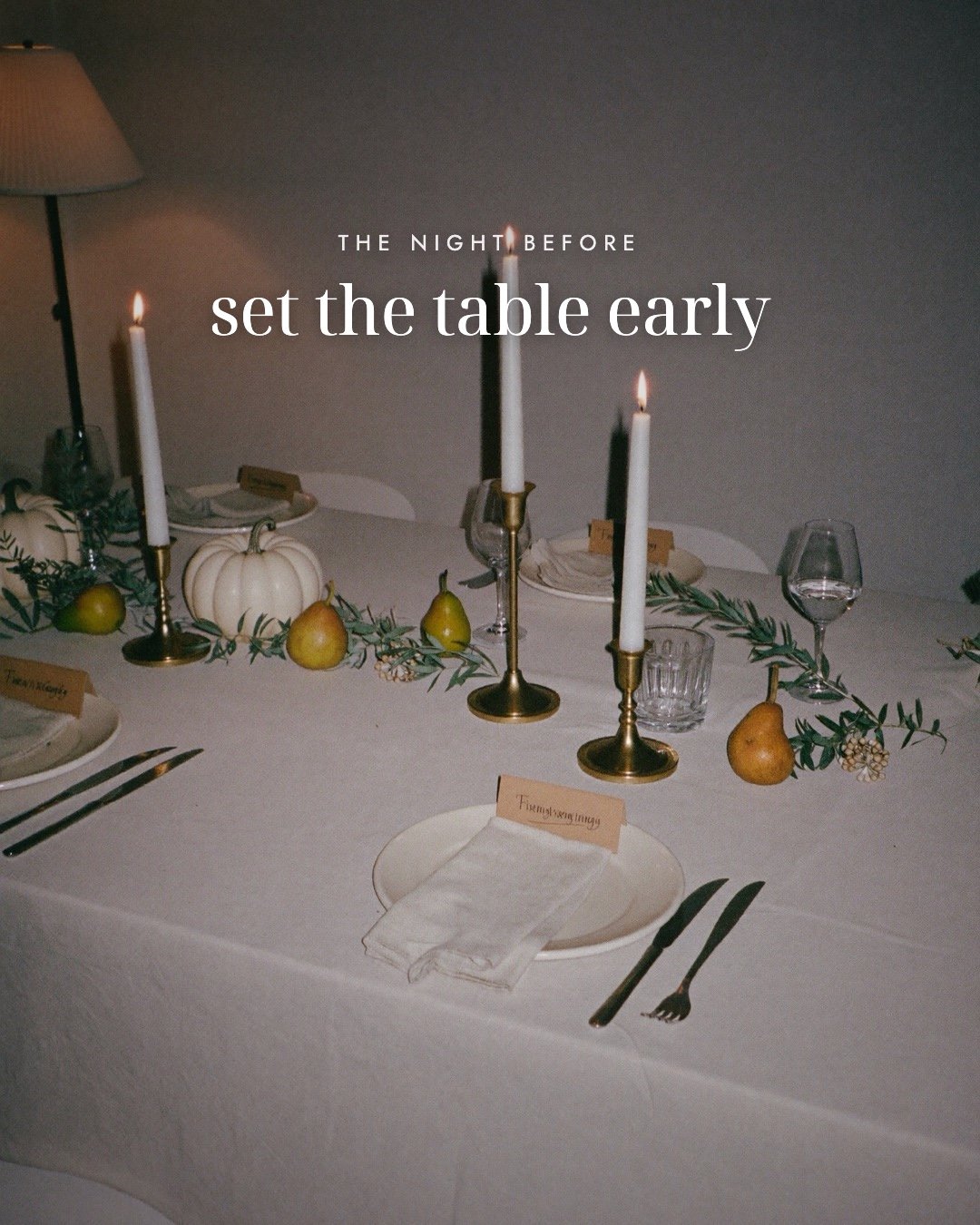
- Candles everywhere: mix tapers and tea lights, and turn off the overhead lights.
- Something from outside: eucalyptus, branches, pears or small pumpkins down the middle.
- One linen layer: a runner or a plain tablecloth makes mismatched plates look intentional.
- Handwritten names: torn kraft paper or a leaf with each friend’s name.
- A gratitude card: a small card at each seat with one question, like what’s been good this year.
Floor seating works too. A coffee table, big pillows and a blanket can feel even cozier than the dining room, especially in a small apartment.
How do you enjoy your own party as the host?
Hosting can quietly turn into managing everyone else’s night. So give yourself a few rules. First, accept every offer of help, even small ones. Next, make drinks self-serve with a pitcher and glasses on a side table. Our sparkling orange mocktail works well in a big pitcher.
Finally, decide on cleanup before anyone arrives. One loaded dishwasher and a stack of to-go containers is enough for tonight. If the whole season feels heavy, our piece on holiday stress for the person who makes it all happen has more ways to share the load.
What about leftovers and the next morning?
Set out to-go containers by the door and send friends home with plates. That keeps your fridge clear and turns the evening into a little gift. Anything you keep should go in the fridge within two hours.
The next morning, drink a big glass of water, eat a real breakfast and take a walk if you can. For a gentle reset before the big day itself, see our tips to enjoy Thanksgiving and still feel good Friday.
Frequently asked questions
How many dishes do you need for Friendsgiving?
For six to eight people, plan one main, two warm sides, one salad or starter, bread and one dessert. That’s usually plenty, especially when everyone sends a little home.
Who pays for Friendsgiving?
Most Friendsgivings are potlucks, so each guest brings a dish and the host covers the main and drinks. If you’re cooking everything, it’s fine to ask friends to chip in or bring wine.
Can you host Friendsgiving on a weeknight?
Yes. Spread the prep over three short evenings, make the main ahead and start around 6:30 or 7, so friends can head home at a reasonable hour.
What can you make ahead for Friendsgiving?
Marinades, braises, chili, salad dressings, roasted vegetables to reheat and most desserts can be made one or two days ahead. Set the table the night before too.
Save this for planning night.
This article is for general information and is not medical or nutrition advice.
Free dinner list
The drained-day dinner list
Thirty dinners for your worst days, plus one new recipe every week. Free, and you can unsubscribe anytime.
Comment TIRED on any of our Instagram posts and we'll send it to you.