

The bread basket isn’t the problem. Eat your salad first: the free blood sugar habit that’s actually backed by studies.
You saw "clothing your carbs" on your feed and wondered if it's real. Here's what small studies say about eating vegetables and protein first, and easy ways to do it at a restaurant, a kids' dinner and a holiday table.
The short answer
Yes, a little. Food order blood sugar research suggests that eating your vegetables and protein before your starch can soften the rise after a meal. The studies are small and short, though. So treat it as a free, gentle habit, not a rule you can break.
On this page
This post has affiliate links. If you buy through them, Clean Fit Fab may earn a small commission at no extra cost to you.
It’s Friday night at your favorite Italian place. The bread basket lands first, warm and perfect. Then you remember a video about “clothing your carbs,” and suddenly the bread feels like a test. Is that real, or is it just one more thing to get wrong?
Here’s the calm version. The food order blood sugar idea is real, it’s simple, and it never asks you to give up the bread. This guide covers what the studies found, how to use it at real tables, and when to let it go. It’s one of the four plate moves in our guide to balancing blood sugar naturally.
What is “clothing your carbs”?
It’s a catchy phrase for an old idea. A “naked” carb is starch or sugar eaten alone, like plain bread on an empty stomach. A “clothed” carb comes with fiber, protein or fat. As a result, it’s digested more slowly.
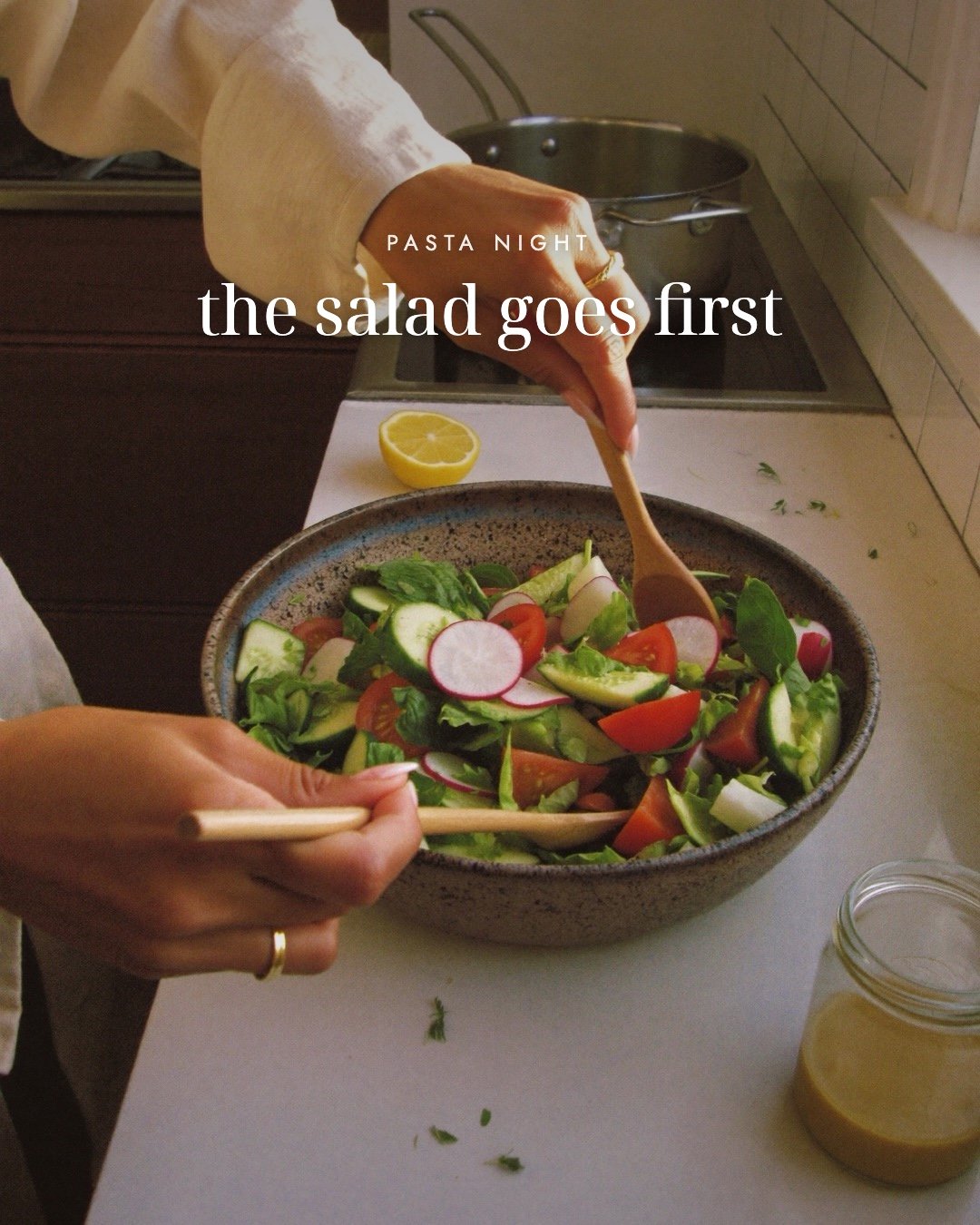
Food order, also called meal sequencing, is the simplest way to do it. You eat the same plate. However, you start with the vegetables and the protein, and you save the starch for last. Nothing is removed. The order is the only change.
Why would that matter? Fiber, protein and fat slow how quickly food leaves your stomach. So when the rice or pasta arrives, it meets a meal already in progress. The Harvard Nutrition Source explains how these same factors change the way carbohydrates affect blood sugar.
Does eating vegetables before carbs lower blood sugar?
In small studies, yes, modestly. Importantly, the people in these studies ate the exact same food each time. Only the order changed.
Your body may also get a head start. For example, in the trial of healthy adults below, eating vegetables first raised GLP-1, a natural fullness hormone, more than the other orders did. That may be one reason a salad first often leads to a calmer, more satisfied meal.
What the research actually says
Three studies come up again and again. So here’s what each one found, in plain numbers.
- 2015, type 2 diabetes: In a pilot study in Diabetes Care, 11 adults ate the same meal on two days. When vegetables and protein came first, glucose was about 29 percent lower at 30 minutes and 37 percent lower at 60 minutes.
- 2019, prediabetes: In a study in Diabetes, Obesity and Metabolism, 15 adults tried three orders. With vegetables first, or vegetables and protein first, glucose peaks were more than 40 percent lower than with carbs first.
- 2020, healthy adults: In a trial in Clinical Nutrition, 16 healthy adults ate vegetables, chicken and rice in five different orders. The glucose response was gentler whenever the rice didn’t come first.
Now the honest part. These studies had 11 to 16 people each, and they tracked a few hours after one meal. As of 2026, no large, long-term trial shows that food order prevents diabetes or changes your weight. So the claim that every meal needs a strict sequence is ahead of the science. In short, food order blood sugar studies are promising, but early.
Also, a rise after eating is normal. In a healthy body, blood sugar goes up after meals and comes back down. You’re not chasing a flat line. Instead, you’re giving your body a slightly softer landing, which many women notice as steadier energy.
Who should be careful? If you take insulin or other diabetes medication, or you’re pregnant, talk with your doctor before you change how you eat. And if any food rule starts to feel stressful, set it down. Peace at the table matters too.
How to use the food order blood sugar habit at real tables
You don’t need to eat in courses like a tasting menu. Instead, just lead with plants and protein when it’s easy. Here’s how that looks in four everyday spots.
1. At home on a weeknight
Put a salad or raw vegetables on the table first, while the main dish finishes. Then serve everything else. Our 5-minute veggie starter salad was made for this: crisp romaine, cucumber, tomatoes and herbs in a lemon, garlic and sumac dressing. Washing greens ahead helps a lot, so a good salad spinner earns its cabinet space.
2. At a restaurant
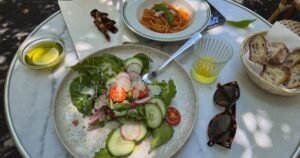
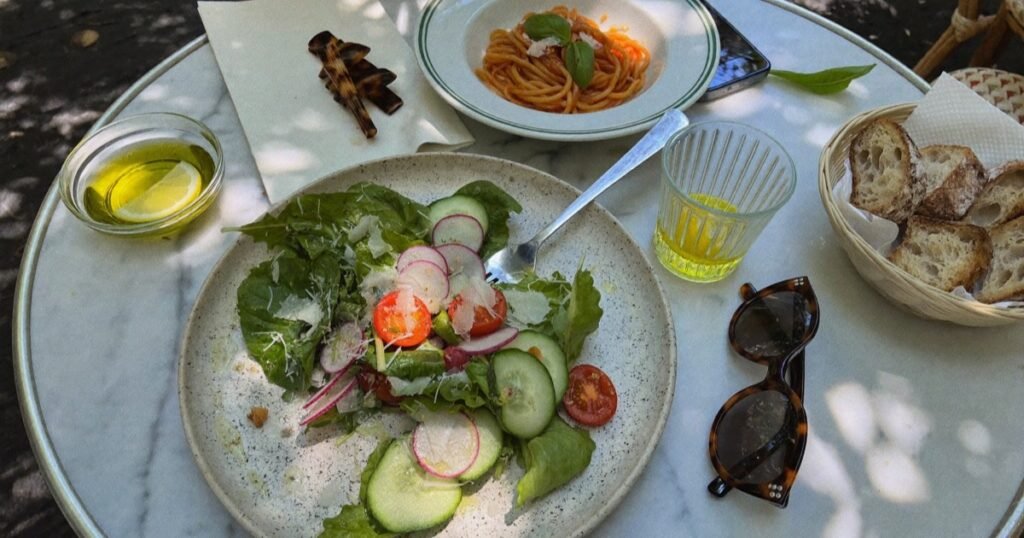
Order a side salad, a vegetable starter or a broth-based soup, and ask for it first. Then enjoy the bread with your meal instead of before it. Dip it in olive oil too, because fat is part of the outfit. If the pasta comes with chicken, shrimp or greens, take a few bites of those first.
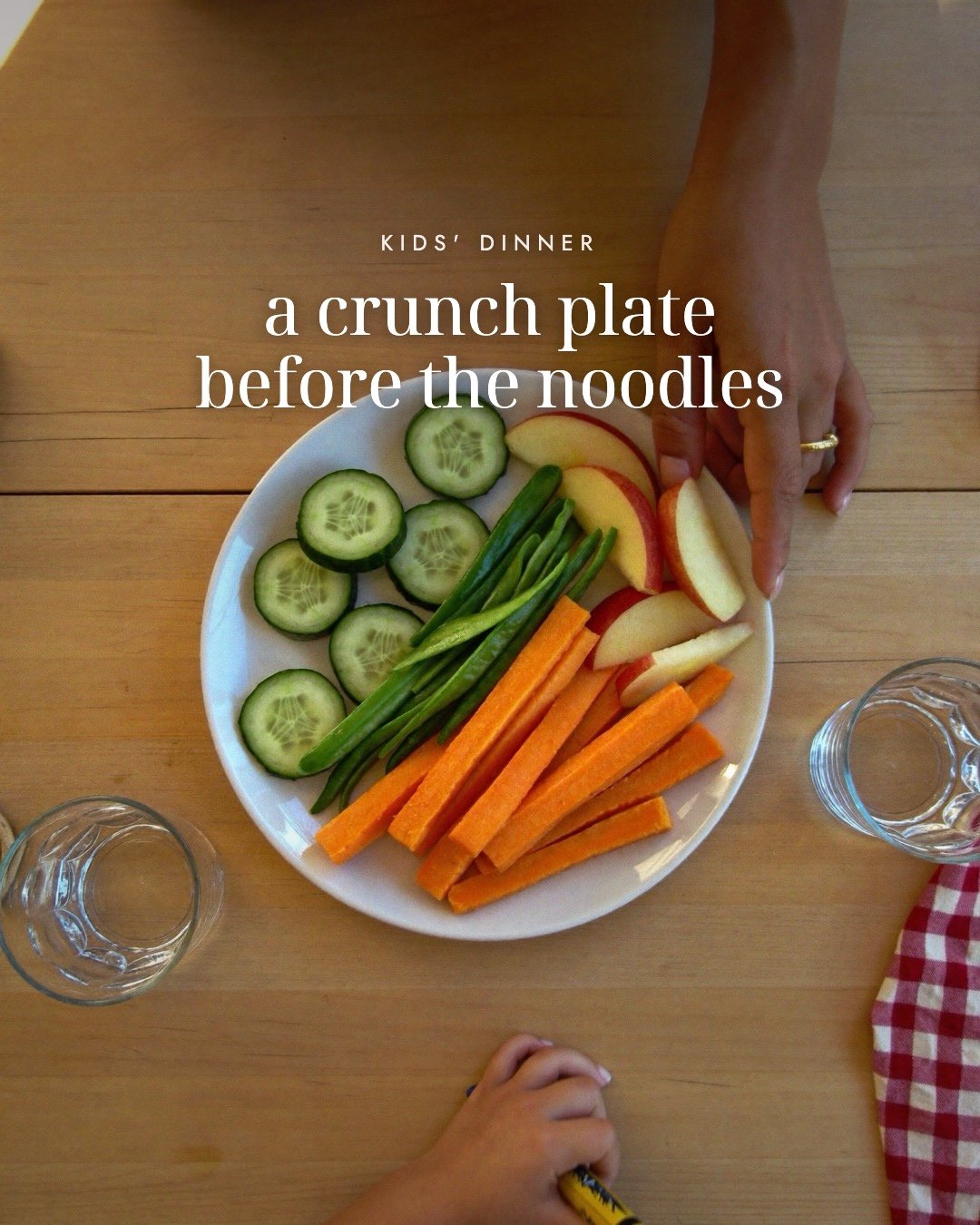
3. At a kids’ dinner
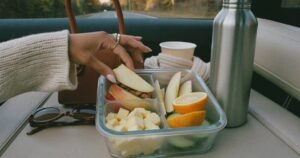
Kids arrive at the table hungry, so use it. Set out cucumber slices, carrot sticks, snap peas or apple wedges while you plate dinner. Many families call it a “crunch plate.” Everyone grazes, nobody negotiates, and the vegetables are gone before the noodles appear. You get your veggies first as well.
4. At a holiday table
With Thanksgiving next week, here’s the easy version. Start your plate with the green beans, the salad and the turkey. Then go back for the stuffing, the potatoes and the roll. You still eat all of it, including pie. For more ideas, see our healthy Thanksgiving tips.
When food order doesn’t matter (and that’s fine)
Some meals can’t be eaten in order. That’s okay, because they’re often clothed already.
- Mixed dishes: soups, stews, curries, burrito bowls and stir-fries already combine vegetables, protein and starch in every bite.
- Balanced bowls: if protein and fiber are in the bowl, the order matters much less.
- Before or after a workout: quick carbs can be useful then, so eat what feels good.
- Celebrations: birthday cake does not need a salad first. Enjoy it.
What matters most is still the whole plate. So aim for protein, plenty of plants and a starch you love. After that, a short walk after you eat may help even more than perfect sequencing.
A simple veggies-first day
Here’s one easy day that leads with plants and protein. Treat it as a picture, not a prescription.
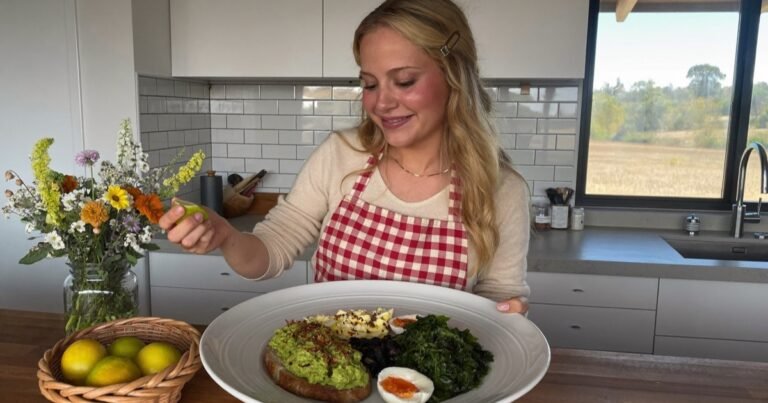
- Breakfast: the savory breakfast plate. Eat the greens, beans and eggs first, then the sourdough. About 27g protein, 15 minutes.
- Lunch: the lemon garlic tuna white bean salad, which is veggies and protein first by design. About 35g protein, 5 minutes.
- Dinner: the veggie starter salad while the pot simmers, then turkey keema with rice. Start with the keema and peas.
Here’s the soul part. Starting with something fresh and crunchy slows you down. You sit, you chew, you breathe. Therefore, dinner feels less like refueling and more like a meal. That pause is good for you, whatever your glucose is doing.
Frequently asked questions
Does eating vegetables before carbs lower blood sugar?
It may soften the rise. In small studies, people who ate vegetables and protein before the starch had a lower blood sugar rise after the meal than when they ate the starch first. The effect is modest, the studies are short, and it’s a gentle habit, not a treatment.
How long should you wait between vegetables and carbs?
You don’t need a timer. In the best-known studies, the carbohydrates came about 10 minutes after the vegetables and protein. At home, a starter salad or a few bites of vegetables and protein before the starch is plenty.
Does food order matter if you don’t have diabetes?
It still seems to make a small difference. A 2020 trial in 16 healthy adults found a gentler glucose response when vegetables came before rice. However, your body already manages blood sugar well, so think of it as a nice extra, never a rule.
What is clothing your carbs?
It’s a social media phrase for pairing carbohydrates with fiber, protein or fat instead of eating them alone. Food order is one way to do it: the vegetables and protein go first, so the starch arrives with company.
Do you have to eat this way at every meal?
No. Use it when it’s easy, like a salad before pasta or the chicken before the rice. Mixed dishes like soups, stews and burritos are already combined, and that’s fine too.
The bottom line
Food order blood sugar research is small but encouraging, and the habit is free. So eat the salad first when it’s easy, then enjoy the bread, the pasta and the pie without a second thought. You are allowed to love your carbs. They just like company.
Save this for your next pasta night.
This article is for general information and is not medical or nutrition advice.
Free dinner list
The drained-day dinner list
Thirty dinners for your worst days, plus one new recipe every week. Free, and you can unsubscribe anytime.
Comment TIRED on any of our Instagram posts and we'll send it to you.