





January 1st is too late. The 90-day reset that starts this week
Waiting for January turns December into a free-for-all. Start a gentle 90-day reset this week with six small decisions that survive the holidays.

The short answer
You don’t need January 1st to start over. A 90 day reset that begins this week carries you through the holidays and lands you in late February with habits that already feel normal. Instead of a big overhaul, you make six small decisions now and keep them, gently.
On this page
It’s the week of Thanksgiving. The days end at 4:45 p.m., the calendar is full of parties, and somewhere in your head a familiar voice whispers that January will be the real start. So December becomes a blur of cookies, late nights and skipped walks. Then January arrives with a 30-day challenge, a new planner and the same tired body. A 90 day reset flips that story.
Starting now isn’t about being stricter. It’s about being kinder to the version of you who shows up on January 2nd. If December already feels heavy, pair this with our guide to romanticizing December, because slow and pretty is part of the plan.
Why waiting for January backfires
Here’s what we get wrong about fresh starts. We treat the weeks before a big date as a last chance to let go. Then we expect one midnight to flip a switch. However, the habits we bring into January are the ones we practiced in December.
Waiting also builds pressure. The longer you wait, the bigger the plan gets, because now it has to make up for everything. As a result, January resets often look like punishment: cut everything, work out every day, start over Monday if you slip. No wonder they tend to fade by February.
Meanwhile, starting now feels almost too small to matter. That’s exactly why it works. Small is quiet. Small survives a holiday party.
What the research says about fresh starts
Fresh starts are real. Researchers at Wharton call it the fresh start effect: people are more likely to start goals after a new week, month, year or birthday. Those dates seem to help us separate from past slip-ups and see the bigger picture. That’s a helpful nudge.
However, the same researchers note that the motivation boost can be short-lived. So a date gives you a spark, not a system. You still need small habits that hold when the spark fades.
And habits take longer than 21 days. In a well-known study from University College London, simple daily habits took an average of 66 days to feel automatic, with a wide range from 18 to 254 days. Also, missing one day didn’t ruin the process. In other words, a 90 day reset matches how habits actually form.
What is a 90 day reset, really?
Think of it as a season, not a challenge. Start this week, and day 90 lands around February 22. So you get the holidays, the new year and the dark middle of winter, all with a few steady habits underneath you.
- Small: each habit takes 10 minutes or less on most days.
- Specific: “walk after lunch” beats “move more.”
- Forgiving: an off day is part of the plan, not the end of it.
- Yours: no rules about what you can’t eat or how you have to look.
6 small decisions to make before the holidays
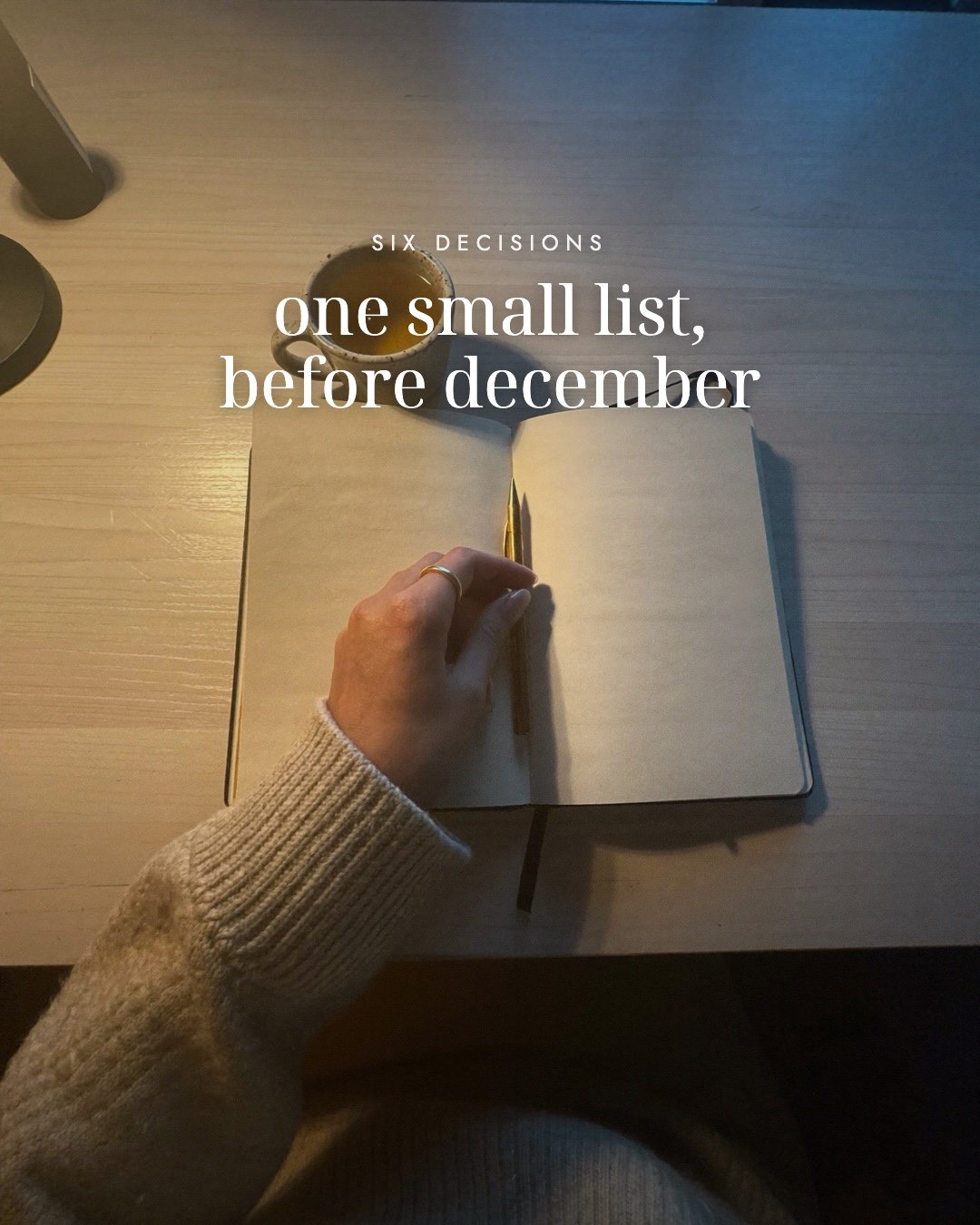
You don’t need a new planner for this. Instead, grab any scrap of paper and make these six decisions tonight. Then tape the list inside a cabinet you open every day.
1. Your sleep anchor
Pick one bedtime window and one wake-up time, and keep them most nights, even in December. Sleep makes everything else easier. If little kids run your nights, our sleep tips for moms work with broken sleep instead of against it.
2. One workout you’ll actually do
Not five. One. A 20-minute strength session twice a week, a Saturday walk with a friend or a Pilates class you love. The CDC suggests adults aim for 150 minutes of moderate activity a week, plus two days of muscle strengthening, but any start counts. For a simple plan, see our strength training guide for women.
3. One meal on repeat
Choose one meal you’ll make the same way most days, usually breakfast. For example, eggs with greens and salsa, or Greek yogurt with berries and pumpkin seeds. When one meal is decided, the rest of the day feels lighter. Our high-protein meal prep has easy options.
4. A 10-minute money check
Holiday spending can quietly wreck January. So pick one Sunday a week to look at your account for 10 minutes. No judgment, just awareness. Then set one gift or hosting budget and say it out loud.
5. One no
Choose one thing to say no to this season: a party, a tradition you’ve outgrown or hosting. That freed-up evening becomes rest. If saying no feels impossible, our guide to holiday boundaries has scripts you can borrow.
6. One small ritual
Finally, choose something that makes the day feel like yours: tea by the window at 7 a.m., a candle at dinner, five minutes of journaling before bed. It doesn’t change your body. However, it changes how the season feels, and that matters.
How to keep your 90 day reset going through December
The holidays will test this. Plan for it now, and the tests get easier.

- Shrink, don’t skip. On busy days, the workout becomes 10 squats, and the ritual becomes one slow breath.
- Start again at the next moment. Not next Monday. The next meal, the next bedtime.
- Check in every 30 days. Around Christmas and again in late January, ask what’s working and what’s too much.
- Celebrate small. Notice the nights you slept well and the mornings you moved. That’s the real progress.
Remember, the goal isn’t a perfect December. It’s arriving in January already in motion.
Try this this week
Tonight, write your six decisions on one card. Tomorrow, do just two of them. By Sunday, add a third. That’s it. Your 90 day reset has started, and nobody had to wait for a countdown.
Frequently asked questions
What is a 90 day reset?
It’s a gentle, 90-day plan built on a few small daily decisions, like a steady bedtime, one workout you’ll actually do and one easy meal on repeat. Instead of a dramatic January overhaul, you start now and let the habits settle in through the holidays.
Why start a reset before the new year?
Because waiting turns December into a free-for-all and January into a punishment. Starting small now means you walk into the new year with momentum, not guilt.
How long does it take to build a habit?
It varies a lot. In one well-known UCL study, simple daily habits took an average of 66 days to feel automatic, with a range from 18 to 254 days. So 90 days gives most small habits a real chance.
What if I fall off during the holidays?
Expect a few off days and plan for them. Missing one day didn’t derail habit building in the research. So just pick it back up at the next meal, the next bedtime or the next morning.
Save this before December gets loud.
This article is for general information and is not medical or nutrition advice.
Free dinner list
The drained-day dinner list
Thirty dinners for your worst days, plus one new recipe every week. Free, and you can unsubscribe anytime.
Comment TIRED on any of our Instagram posts and we'll send it to you.