





Wide awake at 3 a.m. the week before your period? It’s not in your head.
Hot, restless nights the week before your period are real. Here's what your hormones are doing, plus a gentle cycle-synced wind-down for every phase.
The short answer
If you can’t sleep before period week, you’re not imagining it. After ovulation, progesterone nudges your body temperature up, and then your hormones drop right before you bleed. As a result, many women get hot, light, choppy sleep for a few nights, and it usually eases once the period starts.
On this page
This post has affiliate links. If you buy through them, Clean Fit Fab may earn a small commission at no extra cost to you.
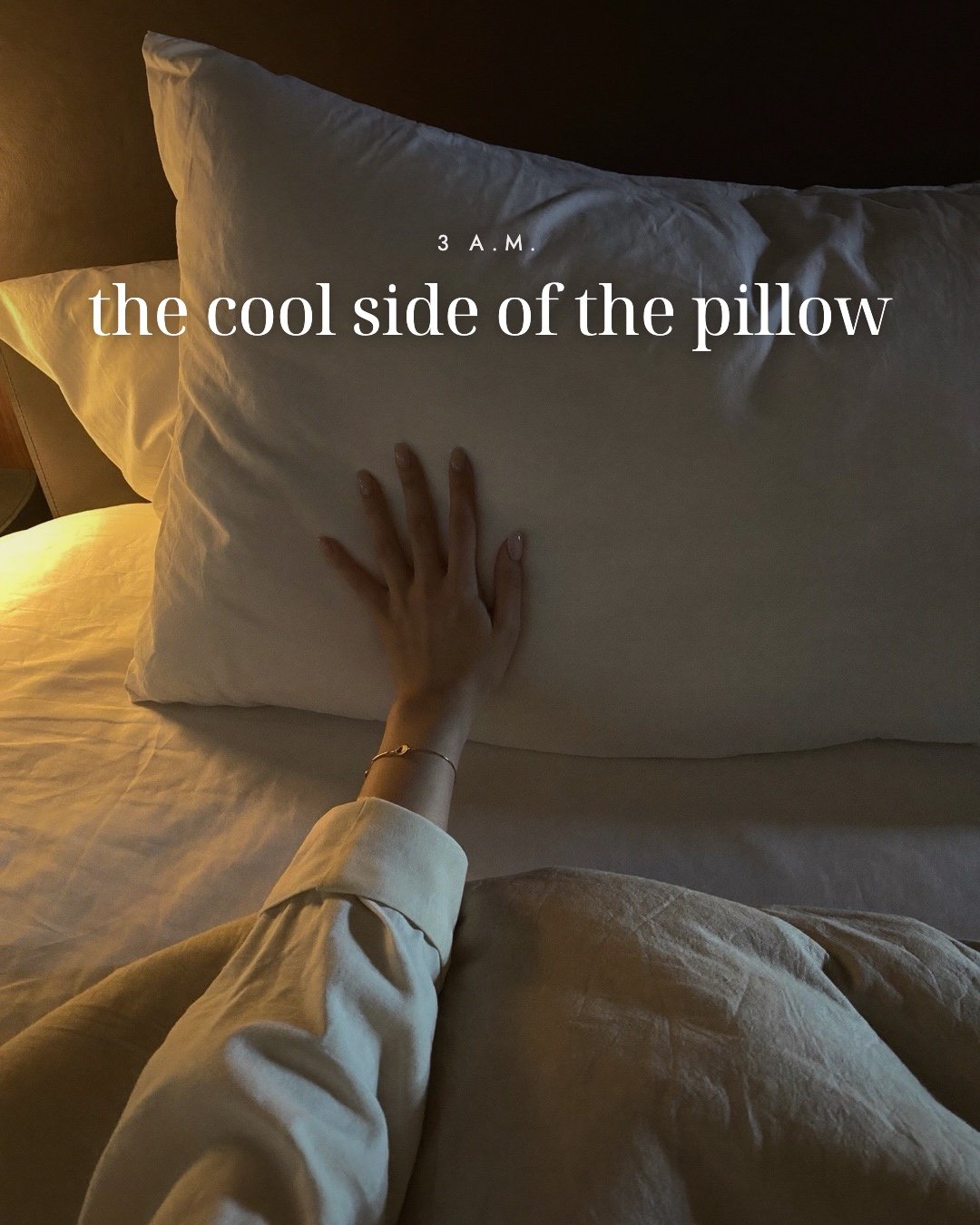
It’s 3:07 a.m. You kick off the blanket, flip the pillow to the cool side and stare at the ceiling. Yesterday you cried at a dog food commercial. Tomorrow you have a full day. Then you check your cycle app, and there it is: five days to go. Again.
First, nothing is wrong with you. Your body simply runs on a monthly rhythm as well as a daily one, and nobody handed you the manual. So this guide explains why you can’t sleep before period week and gives you a gentle, cycle-synced wind-down for every phase. For the bigger picture, start with our full guide to sleep tips for women.
Why you can’t sleep before period week
Your cycle has two halves. The first half, the follicular phase, runs from day one of your period to ovulation. The second half, the luteal phase, runs from ovulation until your next period. That second half is where sleep tends to wobble.
After ovulation, progesterone rises. Progesterone can feel calming, but it also turns up your inner thermostat. According to a research review in the NIH library, core body temperature runs about 0.3 to 0.7 degrees Celsius higher in the luteal phase. That’s roughly half a degree to one degree Fahrenheit.
That sounds tiny. However, your body needs to cool down a little to fall asleep and stay asleep. So when your baseline runs warmer, your usual blanket, pajamas and room can suddenly feel like too much.
Then, in the last few days before your period, progesterone and estrogen both fall quickly. For many women, that drop is when the 3 a.m. wakeups, the vivid dreams and the short fuse show up. Meanwhile, cramps, a tender chest and bloating don’t exactly help you get comfortable.
- Warmer nights: you wake up hot, kick off the covers and hunt for the cool side of the pillow.
- Lighter sleep: small sounds wake you, and you drift back more slowly.
- More wakeups: especially between 2 and 4 a.m.
- Heavier days: you feel foggy and tired, even after a full night in bed.
What the research actually says
Here’s the honest part. The Sleep Foundation reports that up to 90 percent of people who menstruate get some premenstrual symptoms, and that sleep trouble usually shows up in the week before the period. It also notes that sleep in that week can shift toward lighter sleep with less REM, the dreaming stage.
However, not every woman feels it. Studies of women with mild or no premenstrual symptoms often find that sleep changes only a little across the month. On the other hand, women with stronger PMS tend to report more insomnia, poorer sleep and more daytime tiredness that week.
So what’s proven, and what’s hype? The temperature rise is well documented. The link between PMS and worse sleep is consistent too. In contrast, strict cycle syncing rules, like a different workout and menu for every phase, aren’t backed by strong research. Think of the phases as a helpful map of your month, not a rulebook.
Finally, magnesium gets a lot of love online. A few small studies suggest it may ease some premenstrual symptoms, but the sleep research is mixed. So it’s fine to try, and it’s not a magic fix.
A cycle-synced wind-down for each phase
You don’t need four new routines. Instead, keep one simple wind-down and turn one dial each week. Many women find that just knowing where they are in the month makes the rough nights feel less personal.
1. Period days: warm and slow
Your temperature drops back down and sleep often improves, but cramps can keep you up. So lean on warmth. Use a heating pad on your lower belly for 15 to 20 minutes on the couch, sip something warm and go to bed a little earlier. You are allowed to do less this week.
2. The week after your period: bank the good sleep
Estrogen climbs, and many women sleep and feel their best here. Therefore, use it. Get morning light, move your body and keep your bedtime steady. This is also the easy week to build a habit, like putting your phone to bed in another room.
3. Around ovulation: keep the rhythm
Energy is often high, and plans run late. Enjoy it, but protect your wake-up time. Also, start cooling the bedroom now, because your temperature is about to rise.
4. The week before your period: cool, dark and gentle
This is the week to baby your sleep. Cool the room, lighten your layers, eat dinner a bit earlier and trade the late scroll for a real wind-down. The five steps below are your luteal week plan.
Your luteal week night routine: 5 steps for tonight
- Cool the room first. Many sleep experts suggest a bedroom in the mid 60s Fahrenheit. So crack a window, turn the heat down or run a fan about an hour before bed.
- Take a warm shower. It sounds backward, but a warm rinse an hour or two before bed helps your body release heat afterward. As a result, you slide into bed cooler.
- Dress the bed in layers. Choose breathable cotton or linen, and use two light layers instead of one heavy comforter. Then you can peel one off at 3 a.m. without fully waking up.
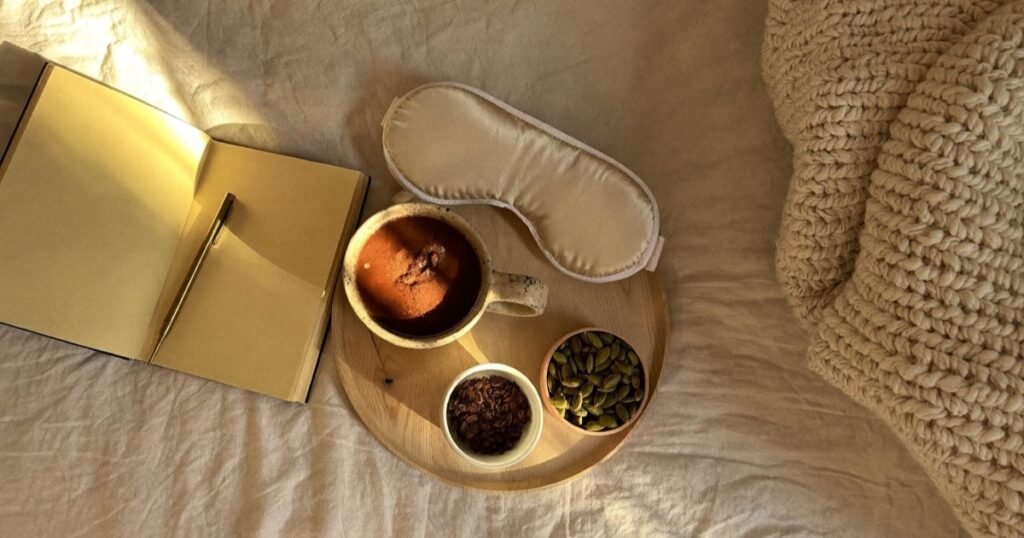
- Make something warm and chocolatey. Our luteal phase magnesium cocoa takes 7 minutes and answers the craving. Sip it an hour or two before bed.
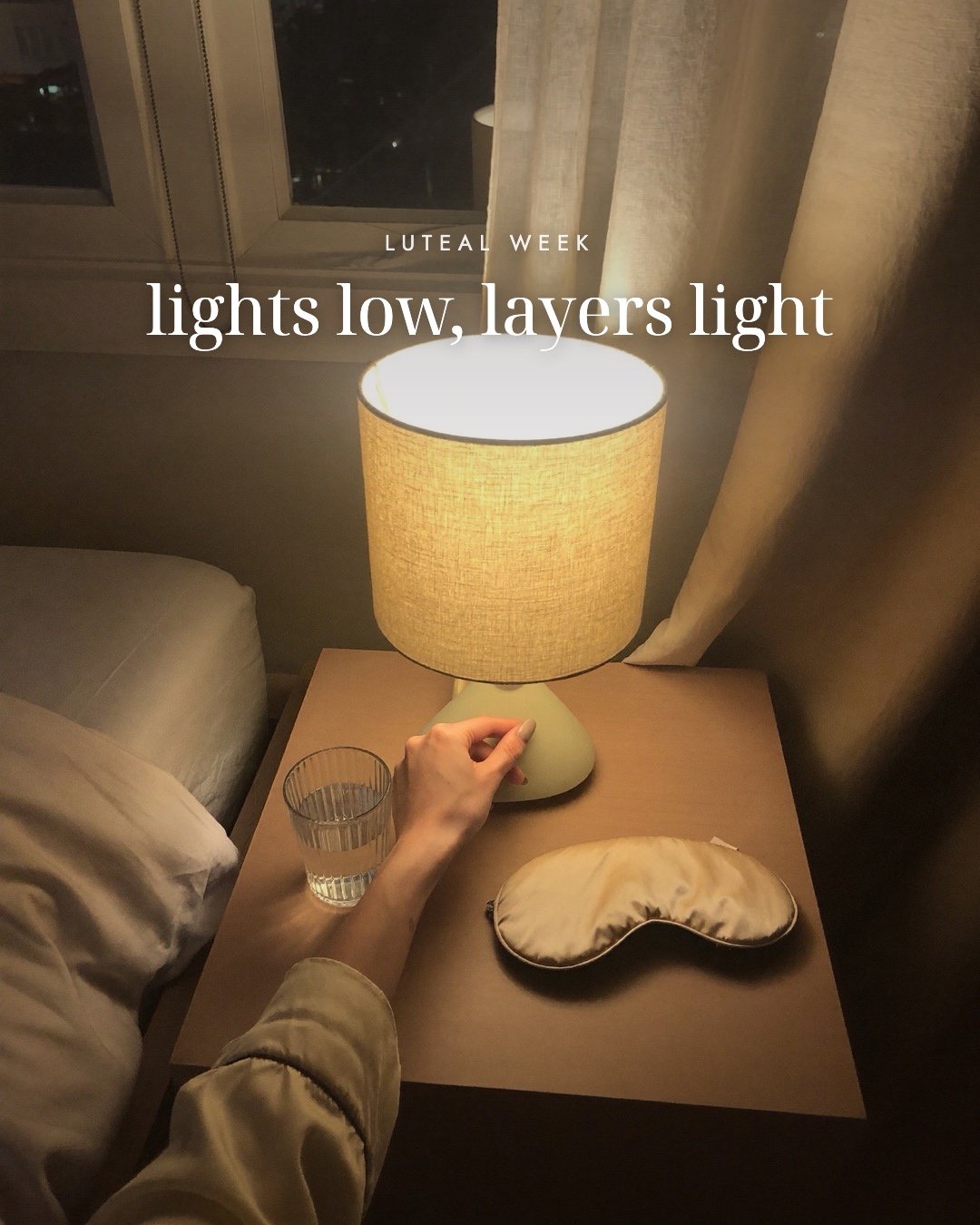
- Dim, then dark. Switch to a lamp after dinner. Next, write tomorrow’s list on paper so your brain can set it down. Finally, make the room truly dark.
A few simple tools can make this easier. For example, a soft silk sleep mask gives you real darkness without new curtains, and a wearable heating pad soothes cramp days on the couch. If you wake up anyway, don’t fight it. Instead, flip the pillow, take five slow breaths with a long exhale and keep the lights off.
The luteal phase magnesium cocoa
The week before your period, the chocolate craving is loud. So work with it. Real cacao, almond butter and milk bring roughly 110 mg of magnesium from food, plus cinnamon, vanilla and a tiny pinch of cayenne for a warm Mexican hot chocolate finish.
It takes one small pot and about 7 minutes. Get the full recipe, with a vegan version, here: Luteal Phase Magnesium Cocoa. And if chocolate isn’t your thing, our chamomile oat milk latte is a lovely caffeine-free swap.
What about a supplement? The NIH Office of Dietary Supplements says women need about 310 to 320 mg of magnesium a day, and many of us fall short. Food comes first: pumpkin seeds, almonds, black beans, spinach and cacao. If you’d like to add magnesium glycinate, look for third-party testing (USP or NSF) and stay under 350 mg a day from supplements. Also, talk to your doctor first, especially if you’re pregnant, breastfeeding, on medication or managing a kidney condition.
When to talk to your doctor
A few restless nights before your period are common. However, some signs deserve a real conversation. ACOG describes premenstrual dysphoric disorder, or PMDD, as a severe form of PMS, and it affects a small share of women.
- Your sleep trouble lasts all month, not just the week before your period.
- Your mood drops hard before your period, or you feel hopeless or unlike yourself.
- You’re so tired that work, driving or parenting feels unsafe.
- Your periods are very heavy, very painful or newly irregular.
In those cases, a doctor can check for things like PMDD, thyroid changes, low iron or perimenopause. Bring two or three months of notes on your sleep and your cycle. It makes the visit far more useful.
Frequently asked questions
Why do I get insomnia before my period?
In the week or so before your period, progesterone keeps your body a little warmer at night, and then both progesterone and estrogen drop. Many women find that this mix brings lighter sleep, more wakeups and a harder time falling back asleep. It usually eases once your period starts.
How many days before your period does sleep get worse?
For most women who notice it, sleep gets choppy about three to seven days before bleeding starts. The Sleep Foundation notes that it often settles shortly after the period begins. A simple tracker can show you your own pattern in two or three cycles.
Is it normal to feel hot at night before your period?
Yes, it’s common. After ovulation, your core temperature runs about 0.3 to 0.7 degrees Celsius higher until your period arrives. That small rise can make a normal bedroom feel stuffy, so a cooler room and lighter layers may help.
Does magnesium help you sleep before your period?
It may help some women, but the research is small and mixed. Food sources like pumpkin seeds, almonds, beans, greens and cacao are a gentle place to start. If you want a supplement, talk to your doctor first and stay under 350 mg a day from supplements.
The bottom line
You are not dramatic, and you are not bad at sleep. Your body is simply running a little warmer and a little more tender this week. So cool the room, soften the evening and let yourself rest without earning it. In a few days the tide turns, and easier nights come back.
Save this for the next time you can’t sleep before period week.
This article is for general information and is not medical or nutrition advice.
Free dinner list
The drained-day dinner list
Thirty dinners for your worst days, plus one new recipe every week. Free, and you can unsubscribe anytime.
Comment TIRED on any of our Instagram posts and we'll send it to you.