Your gut doesn’t need a fancy probiotic. It needs a spoonful of something sour.
Fermented foods for gut health start with one spoonful a day. Here are the easiest ones to try, how to find live cultures, and how to start slow.
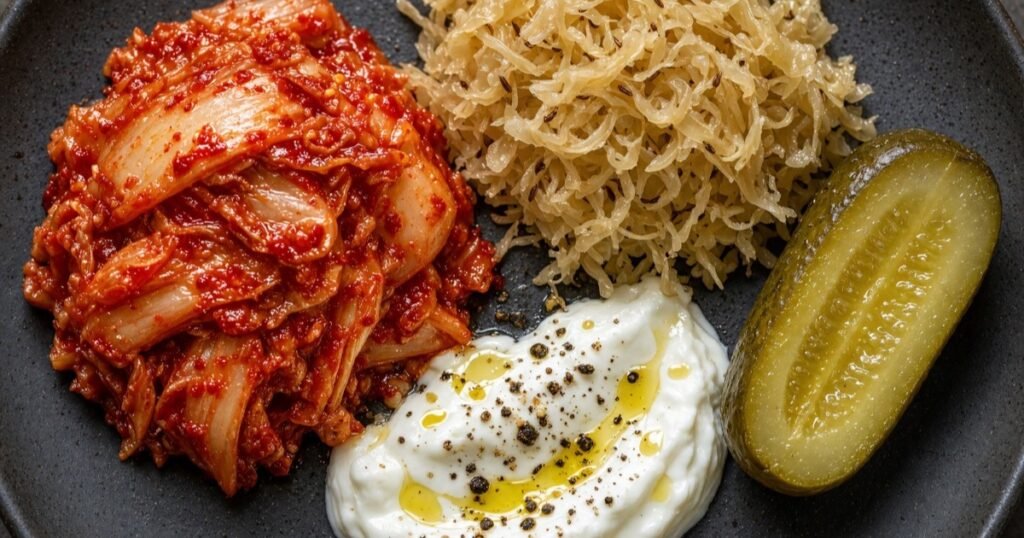
The short answer: The easiest way to start with fermented foods for gut health is one small serving a day: plain yogurt, kefir, raw sauerkraut, kimchi or miso. Look for the words “live and active cultures” or “unpasteurized” on the label. Then build up slowly over a few weeks.
You’ve seen the jars. Kimchi on the top shelf, kefir next to the milk, a pricey bottle of gut pills by the register. Everyone says fermented foods for gut health are a must, yet nobody tells you where to begin. So the jar of sauerkraut stays in the cart, then goes back on the shelf.
Here’s the good news: you don’t need a fancy plan. Instead, you need one spoonful, a little label reading, and a few easy places to put it. Let’s make it simple.
Why fermented foods for gut health get so much buzz
Your gut is home to trillions of microbes. Together, they help break down food, make certain vitamins, and talk to your immune system. That community is called your gut microbiome. Also, it changes based on what you eat.
Fermented foods are made when bacteria or yeast break down the sugars in food. That process gives sauerkraut its sour bite and yogurt its tang. Plus, many of these foods still carry live microbes when you eat them.
One study gets quoted a lot, so here are the real numbers. In 2021, Stanford researchers put 36 healthy adults on a 10-week diet high in either fermented foods or fiber. The fermented group slowly worked up to about six small servings a day. As a result, the variety of microbes in their gut went up, and 19 inflammation-related proteins in their blood went down. The fiber group did not see those same changes in 10 weeks.
Still, that was one small, short study. So think of fermented foods as a helpful habit, not a magic fix.
What are the best fermented foods for beginners?
Start with foods that taste good to you and fit meals you already make. Here are the easiest ones, with rough serving sizes:
- Plain yogurt (3/4 cup, about 8 to 15g protein depending on the style): the gentlest start, with a mild tang.
- Kefir (1/2 cup): a drinkable, tangier yogurt that often has a wider mix of cultures.
- Raw sauerkraut (2 tablespoons): crunchy, salty and sour. Great with eggs and roasted meats.
- Kimchi (2 tablespoons): spicy, garlicky Korean fermented cabbage with chili and ginger.
- Miso (1 teaspoon to 1 tablespoon): a salty fermented paste that adds deep, savory flavor.
- Fermented pickles (1 spear): the refrigerated, brine-packed kind, not the shelf-stable jar.
- Tempeh (3 ounces, about 15 to 18g protein): firm fermented soybeans. It’s usually cooked, so think of it as a protein, not a source of live cultures.
For example, a bowl of plain Greek yogurt in the morning is already a fermented food. Our cinnamon cardamom Greek yogurt protein bowl is an easy way to start without buying anything new.
How to read the label so you get live cultures
This is where most people get tripped up. Not every jar labeled “pickled” or “kraut” still has live microbes. That’s because heat and pasteurization can kill them. According to Harvard’s Nutrition Source, heated or pasteurized products may not contain live microbes at all.
So look for these clues:
- The words: “live and active cultures,” “raw,” “unpasteurized” or “naturally fermented.”
- The location: the refrigerated case. Live foods usually need to stay cold.
- The ingredients: short and simple, like cabbage, salt, garlic and spices. Sauerkraut needs only cabbage and salt.
- The sugar: for yogurt and kefir, choose plain and add your own fruit or a little honey. Flavored cups can carry a lot of added sugar.
Also, shelf-stable sauerkraut and pickles are fine for flavor. However, they usually aren’t a source of live cultures.
Start low and go slow
Going from zero to a big bowl of kimchi can leave you gassy or bloated. That doesn’t mean fermented foods are bad for you. Instead, your gut just needs time to adjust.
Here’s a simple ramp-up plan:
- Week 1: one tablespoon or a few sips of kefir, once a day.
- Week 2: two small servings a day, such as yogurt in the morning and a forkful of sauerkraut at dinner.
- Week 3 and beyond: two to three servings a day, rotating different foods.
Variety matters, too. Different fermented foods carry different microbes. So rotating yogurt, kraut, kimchi and miso may give your gut a wider mix than eating the same one every day.
Easy ways to add them to food you already eat
You don’t need new recipes. Instead, add a spoonful to plates you already make. Just add live foods after cooking, since high heat can kill the cultures.
- Eggs: pile kimchi or sauerkraut on top of scrambled or fried eggs.
- Rice and beans: a forkful of kimchi adds crunch, heat and acid.
- Roasted chicken or salmon: serve sauerkraut on the side, like a bright, salty slaw.
- Soups: stir miso into a ladle of warm broth, then add it back after the pot is off the heat. Boiling it can kill the cultures.
- Dressings: whisk plain yogurt with garlic, lemon, cumin and olive oil for a quick sauce.
- Snacks: sip a small glass of plain kefir, or eat a fermented pickle spear with a few almonds.
Plus, the brine from raw sauerkraut or pickles makes a punchy splash in dressings and marinades.
Feed the microbes, too: fermented foods plus fiber
Fermented foods bring microbes in. Meanwhile, fiber feeds the ones already living in your gut. Your gut bacteria break fiber down into short-chain fatty acids, which help keep the gut lining healthy.
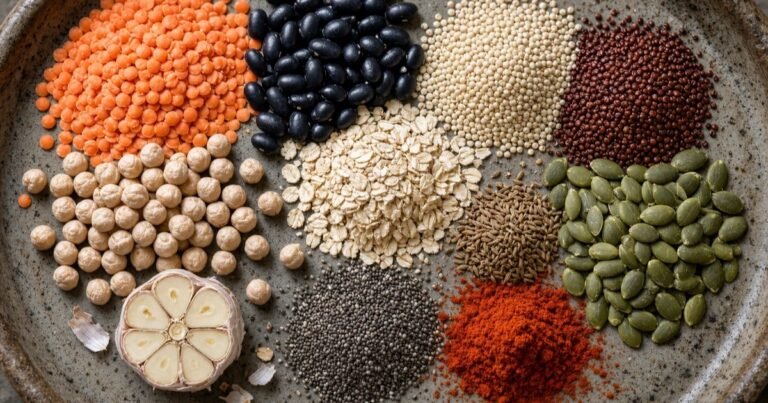
That’s why the best gut routine pairs both. Beans, lentils, oats, onions, garlic, leeks, apples and greens are all great fiber sources. In fact, most women fall well short of the daily fiber goal. Our guide to high-fiber foods shows cheap, easy ways to close that gap.
So try a simple rule: one fermented food and one high-fiber food at most meals. That’s it.
Who should check with a doctor first
For most healthy adults, fermented foods are a normal part of eating. Still, a few people should talk to a doctor before adding more. That includes anyone who is pregnant, has a weakened immune system, or has a gut condition like IBS or SIBO.
Also, kimchi, sauerkraut, miso and pickles can be high in sodium. If you watch your salt, keep portions small and taste before you salt the rest of the plate.
Frequently asked questions
What are the best fermented foods for gut health to start with?
Plain yogurt with live and active cultures, kefir, raw sauerkraut and kimchi are the easiest places to start. They are easy to find, easy to add to meals you already eat, and most people like at least one of them.
How much fermented food should you eat a day?
There is no official amount. Start with a spoonful or two a day and build up slowly over a few weeks. In one small Stanford study, people worked up to about six small servings a day over ten weeks.
Is pickled the same as fermented?
Not always. Many shelf-stable pickles are made with vinegar and heat, so they usually have no live cultures. Fermented pickles and sauerkraut sit in salty brine, live in the refrigerated case, and often say raw, unpasteurized or live cultures on the label.
Can fermented foods cause bloating?
Some people notice gas or bloating at first, especially if they start with big portions. Going slow usually helps. If you are pregnant, have a weakened immune system or a gut condition, check with your doctor first.
Save this for your next grocery run. Comment or message GUT and we’ll send you the beginner fermented foods shopping list.
This article is for general information and is not medical or nutrition advice.