


Coffee and your kid’s leftover toast isn’t breakfast. Here’s how much protein you need to keep your muscle.
Breakfast is coffee and toast crusts, and dinner is your first real meal. Here's how much protein you really need to keep your muscle, plus an easy palm and plate fix.

The short answer
Most women who lift need more than the basic recommendation. Research on protein for women muscle building points to about 1.2 to 1.6 grams per kilogram of body weight a day. For a 150-pound woman, that’s roughly 80 to 110 grams, spread across meals of about 25 to 30 grams each.
On this page
This post has affiliate links. If you buy through them, Clean Fit Fab may earn a small commission at no extra cost to you.
It’s 7:40 a.m. Breakfast was coffee and the crust your kid left on a plate. Lunch was a handful of crackers between calls. So dinner is your first real meal, and by then you’re starving. Meanwhile, you’ve been lifting twice a week and wondering why you still feel soft and tired.
First, you’re not doing anything wrong. You’re just feeding everyone except yourself. Protein for women muscle support is simpler than the internet makes it look, and this guide gives you an easy palm and plate method. If you’re new to lifting, start with our guide to strength training for women.
Why protein matters more as you age
Muscle quietly slips away with time. Research in the NIH library estimates that adults lose about 3 to 8 percent of their muscle each decade after 30. That’s why carrying groceries, climbing stairs and getting off the floor can start to feel harder.
Lifting is the signal that tells your body to keep muscle. Protein is the building material. So you need both. Strength training without enough protein is like ordering lumber and never getting it delivered.
Plus, your body gets a little less efficient at using protein as you get older. A 2025 review on protein and aging notes that older adults may need about 25 to 30 grams per meal to get the same muscle response younger adults get from less. In other words, the toast-crust breakfast matters more at 42 than it did at 22.
How much protein should a woman eat to build muscle?
Let’s start with the baseline. According to the Harvard T.H. Chan School of Public Health, the Recommended Dietary Allowance is 0.8 grams of protein per kilogram of body weight. That works out to about 54 grams a day for a 150-pound woman. However, the RDA is the minimum to avoid deficiency. It was never meant as a target for building strength.

For women who strength train, the numbers go up. Here’s a simple guide for a 150-pound (68 kg) woman:
- Minimum (RDA, 0.8 g/kg): about 54 grams a day.
- Active and over 40 (1.2 g/kg): about 80 grams a day.
- Lifting to build muscle (1.6 g/kg): about 110 grams a day.
To find your own number, divide your weight in pounds by 2.2 to get kilograms. Then multiply by 1.2 to 1.6. Also, you don’t need to hit it perfectly. Landing in the range most days is what counts.
What the research actually says about protein for women muscle building
Here’s the honest version. The International Society of Sports Nutrition says 1.4 to 2.0 grams per kilogram a day is enough for most people who exercise. It also suggests about 20 to 40 grams per meal, spread every 3 to 4 hours.
What’s well supported? Eating enough protein while you lift helps you gain and keep muscle. Also, spreading it across the day seems to work better than one huge dinner.
What’s still debated? The exact best number for women in midlife. Much of the research was done on men, so the ranges are a guide, not a rule. And what’s hype? The idea that more is always better. Above about 1.6 grams per kilogram, the extra benefit for most people looks small.
Who should be careful? If you have kidney disease or another medical condition, talk to your doctor before you eat more protein. The same goes if you’re pregnant or breastfeeding.
The palm and plate method
Counting grams forever is exhausting. So here’s the shortcut many women find easier. You use your own hand and your own plate.
1. Start every meal with one palm of protein
A piece of chicken, fish, turkey or beef about the size and thickness of your palm gives you roughly 20 to 30 grams. Two or three eggs, a cup of Greek yogurt or a cup of cottage cheese count too. So put the protein on the plate first, then build around it.
2. Fill half the plate with color
Next, add vegetables: peppers, greens, roasted squash, cucumbers. They bring fiber and help you feel full longer.
3. Add a cupped hand of slow carbs and a thumb of fat
Finally, add a cupped hand of rice, potatoes, beans or sourdough, plus a thumb of olive oil, butter, avocado or cheese. That’s it. Do this three times a day and you’ll land close to 80 to 100 grams without an app.
4. Fix breakfast first
Breakfast is where most women come up short. Instead of coffee alone, make two jars of gingerbread protein overnight oats tonight. Each one has about 33 grams of protein, and they keep in glass mason jars for four days.
A protein-first day that tastes like real food
Here’s what about 100 grams looks like when you actually enjoy eating it. Every dish links to the full recipe.
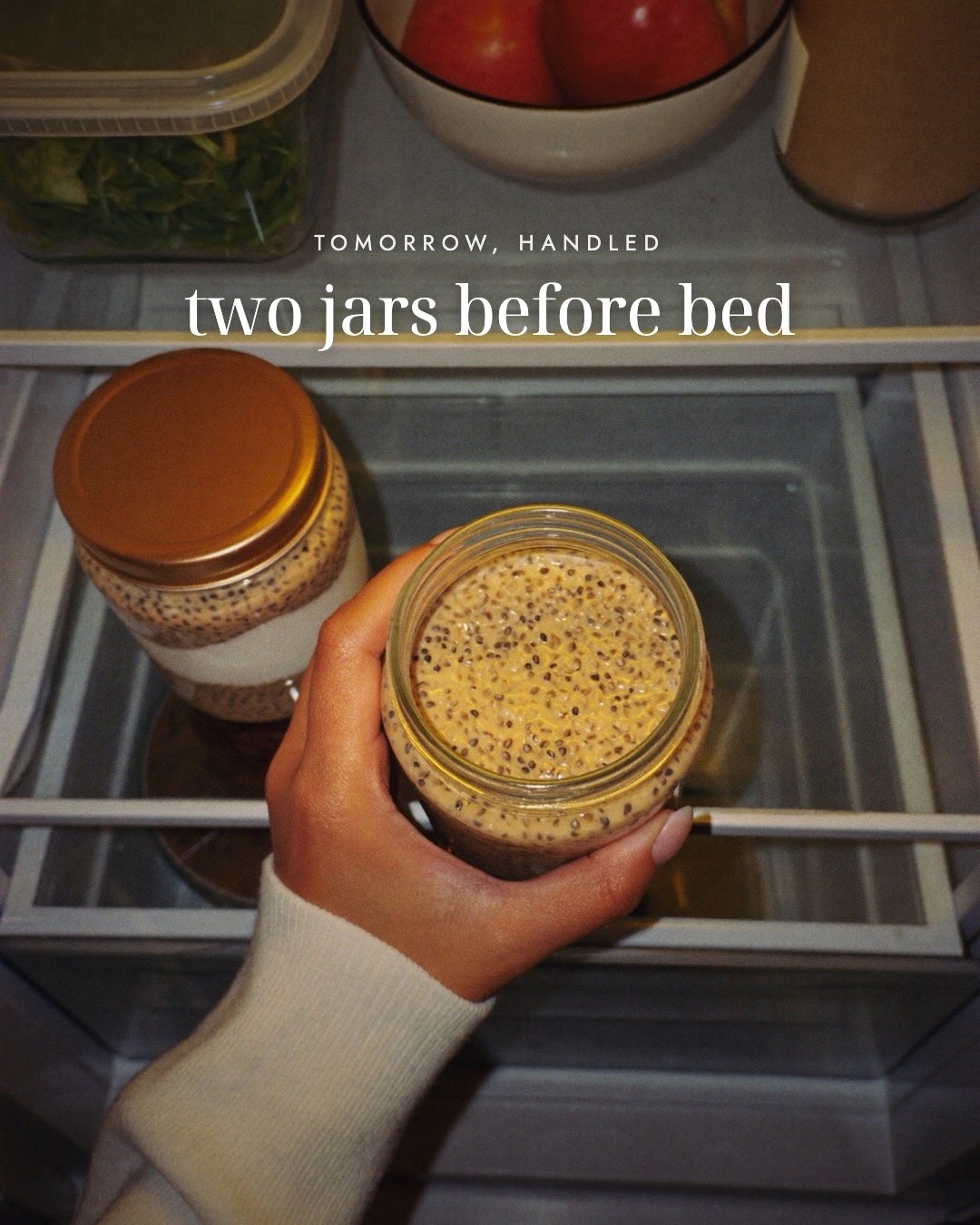
- Breakfast: Gingerbread protein overnight oats, about 33g protein, 5 minutes the night before.
- Lunch: Greek lemon garlic chicken thighs from Sunday’s prep, about 30g protein, 5 minutes to reheat in a skillet.
- 4 p.m. snack: Cottage cheese queso with sliced peppers and cucumbers, about 13g protein.
- Dinner: Turkey keema with peas, ginger and garam masala, about 30g protein, 30 minutes.
Want more options? Try harissa feta protein egg bites for grab-and-go mornings, or plan the whole week with our high-protein meal prep guide.
What about protein powder?
Protein powder is optional. Still, it’s handy on mornings when there’s no time to cook. Half a scoop stirred into oats or yogurt adds about 12 to 15 grams. Plus, a simple shaker bottle makes a post-workout shake easy in the car.
If you buy one, look for third-party testing, like NSF Certified for Sport, on the exact flavor you choose. Also, keep the ingredient list short. And talk to your doctor first if you’re pregnant, breastfeeding, on medication or managing a condition.
Finally, remember the real goal. Powder fills gaps. Real meals still do the heavy lifting. If your lifting week needs a plan too, our perimenopause workout guide pairs well with this one.
Frequently asked questions
How much protein should a woman eat to build muscle?
Many experts suggest about 1.2 to 1.6 grams per kilogram of body weight a day if you strength train, which is about 80 to 110 grams for a 150-pound woman. The basic RDA of 0.8 grams per kilogram is a minimum, not a muscle target.
Can you eat too much protein?
For most healthy women, intakes in the ranges above are considered safe. However, if you have kidney disease or another medical condition, talk to your doctor before eating more protein.
Is protein powder necessary to build muscle?
No. Real food can cover everything. Protein powder is simply a convenience for busy mornings. If you use one, look for third-party testing, such as NSF Certified for Sport, on the exact flavor you buy.
Does it matter when you eat protein?
Spreading it out seems to help. Research suggests about 20 to 40 grams per meal, every 3 to 4 hours, works better for muscle than one big protein dinner.
The bottom line
You are allowed to feed yourself like you feed everyone else. A palm of protein at every meal, a real breakfast and a strong snack can change how your body feels in a few weeks. Start with tomorrow’s breakfast.
Save this for your next grocery run. Comment or message PROTEIN and we’ll send you the protein-first breakfast list.
This article is for general information and is not medical or nutrition advice.
Free dinner list
The drained-day dinner list
Thirty dinners for your worst days, plus one new recipe every week. Free, and you can unsubscribe anytime.
Comment TIRED on any of our Instagram posts and we'll send it to you.