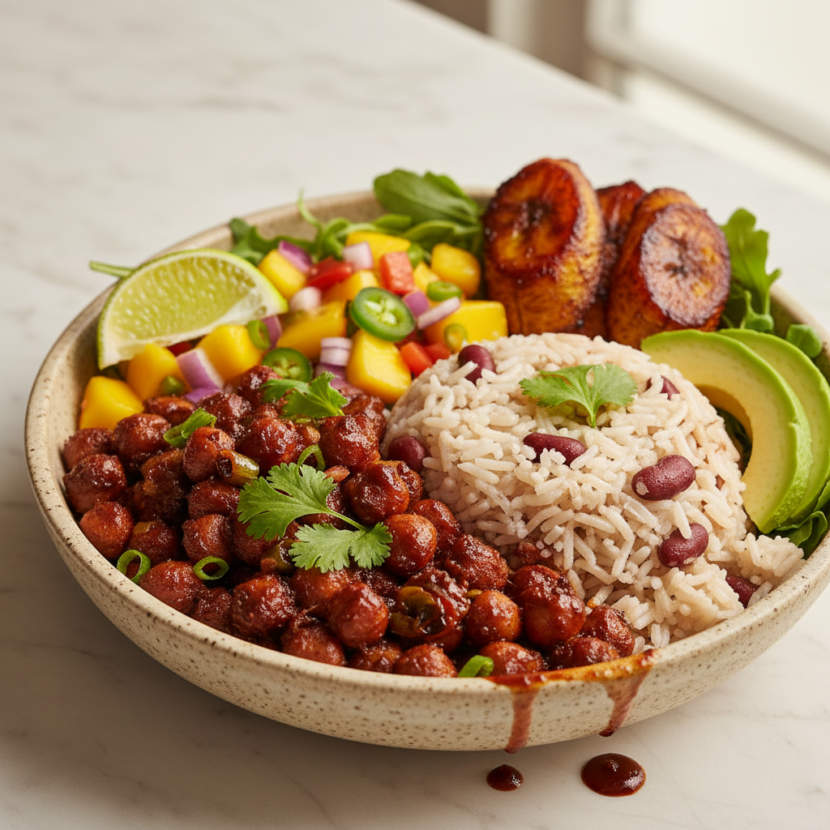
32g protein | 545 calories | 35 minutes
I used to think jerk seasoning was just “spicy” until I actually tasted real Jamaican jerk chicken at a tiny takeout spot in Brooklyn run by a woman who told me her grandmother’s recipe had nineteen ingredients and that most people “don’t respect the complexity.” She wasn’t wrong.
Real jerk isn’t just heat—it’s this layered situation with warm spices, aromatics, sweetness from molasses or brown sugar, brightness from citrus, and yes, a significant kick from Scotch bonnet peppers. It’s the kind of flavor that makes you close your eyes on the first bite because there’s too much happening to process while looking at things.
When I went plant-based, I missed that punch-you-in-the-mouth flavor intensity. Most vegan food I encountered was trying so hard to be healthy and clean that it forgot to be crave-worthy. Then I realized jerk seasoning doesn’t need meat—it’s so flavor-forward that it makes anything taste incredible. Chickpeas, with their ability to crisp up and absorb marinades, might actually be the perfect vehicle for it.
This bowl combines crispy jerk chickpeas with creamy coconut rice, bright mango salsa, and caramelized plantains. It’s sweet, spicy, tropical, and so satisfying that you’ll forget you’re eating legumes. Fair warning: this recipe has some heat. If you’re sensitive, adjust accordingly. If you’re a heat seeker, crank it up.
Your kitchen is about to smell like vacation.
Ingredients
For the jerk chickpeas:
- 2 cans (15 oz each) chickpeas, drained, rinsed, and patted very dry
- 3 tablespoons olive oil
- 2 tablespoons soy sauce or coconut aminos (for soy-free)
- 2 tablespoons lime juice
- 2 tablespoons brown sugar
- 1 tablespoon molasses or more brown sugar
- 4 cloves garlic, minced
- 2 tablespoons fresh thyme leaves (or 1 tablespoon dried)
- 1 tablespoon ground allspice
- 2 teaspoons smoked paprika
- 2 teaspoons ground cinnamon
- 1 teaspoon ground nutmeg
- 1 teaspoon cayenne pepper (adjust to taste)
- 1 teaspoon black pepper
- 1/2 teaspoon ground cloves
- 1-2 teaspoons habanero hot sauce or 1 Scotch bonnet pepper, minced (if you can handle it)
- 1 teaspoon salt
For the coconut rice:
- 1.5 cups jasmine rice
- 1 can (13.5 oz) coconut milk (full-fat for best flavor)
- 3/4 cup water or vegetable broth
- 1 tablespoon coconut oil or olive oil
- 1/2 teaspoon salt
- 2 cloves garlic, minced
- 3-4 sprigs fresh thyme
- 1 can (15 oz) black beans, drained and rinsed
For the mango salsa:
- 1 large ripe mango, diced small
- 1/2 red bell pepper, diced
- 1/4 red onion, finely diced
- 1/4 cup fresh cilantro, chopped
- Juice of 1 lime
- 1 jalapeño, seeded and minced (optional)
- Pinch of salt
For the plantains:
- 2 ripe plantains (yellow with black spots, not green)
- 2 tablespoons coconut oil
- Pinch of cinnamon and salt
For serving:
- 2 cups mixed greens or arugula
- Lime wedges
- Extra cilantro
- Sliced avocado (optional but recommended)
Instructions
Step 1: Make the jerk marinade and start the chickpeas (10 minutes active, 25 minutes roasting)
Preheat your oven to 425°F. This needs to be hot to get those chickpeas crispy.
In a large bowl, whisk together olive oil, soy sauce (or coconut aminos), lime juice, brown sugar, molasses, garlic, thyme, allspice, smoked paprika, cinnamon, nutmeg, cayenne, black pepper, cloves, hot sauce, and salt. Taste it—it should be intensely flavored, almost too strong on its own. That’s what you want.
Pat your chickpeas completely dry with paper towels or a clean kitchen towel. This is crucial. Wet chickpeas won’t crisp. Once they’re dry, add them to the jerk marinade and toss until every chickpea is thoroughly coated.
Spread them in a single layer on a large baking sheet lined with parchment paper. Make sure they’re not crowded—give them space to crisp, not steam.
Roast for 25-30 minutes, shaking the pan halfway through, until they’re crispy and deeply caramelized. Some might even pop—that’s fine. The edges should be dark and crunchy, almost like they’re on the edge of burning. That caramelization is where the flavor lives.
Step 2: Cook the coconut rice (25 minutes, mostly hands-off)
While the chickpeas roast, make your rice. Heat coconut oil in a medium saucepan over medium heat. Add garlic and cook for 30 seconds until fragrant.
Add rice and stir to coat in the oil. Toast for about 1 minute—you’ll smell it getting slightly nutty.
Add coconut milk, water, salt, and thyme sprigs. Stir once, bring to a boil, then reduce heat to low. Cover and cook for 15-18 minutes until rice is tender and liquid is absorbed.
Remove from heat. Stir in black beans and let it sit, covered, for 5 minutes. The residual heat will warm the beans through. Remove thyme sprigs before serving.
The rice should be creamy, slightly sweet from the coconut milk, and aromatic from the garlic and thyme. If it smells boring, you did something wrong.
Step 3: Make the mango salsa (5 minutes)
This is your bright, fresh element that cuts through all the richness and spice.
Combine diced mango, red bell pepper, red onion, cilantro, lime juice, jalapeño (if using), and a pinch of salt in a bowl. Toss gently. Taste and adjust—it should be sweet from the mango, bright from the lime, with a little heat and crunch.
Let it sit while you finish everything else. The flavors will marry and get even better.
Step 4: Caramelize the plantains (8-10 minutes)
This step is optional but highly recommended. Caramelized plantains add this sweet, almost dessert-like element that’s traditional in Caribbean cuisine and creates an amazing contrast with the spicy chickpeas.
Peel plantains and slice them diagonally into 1/2-inch thick pieces. Heat coconut oil in a large skillet over medium-high heat. Add plantain slices in a single layer.
Cook for 3-4 minutes per side until golden brown and caramelized. They should be soft in the middle with crispy, sweet edges. Sprinkle with a tiny pinch of cinnamon and salt while they’re hot.
If your plantains aren’t ripe enough (they should be mostly yellow with black spots), they won’t caramelize properly and will be starchy instead of sweet. Use ripe ones.
Step 5: Build your bowl (and try not to eat it before you photograph it)
Start with a generous scoop of coconut rice and beans as your base. Add a handful of fresh greens on the side—the peppery bite of arugula is perfect here, but any greens work.
Pile on the jerk chickpeas while they’re still warm and crispy. The contrast of their crunchy exterior with the creamy rice is everything.
Add a generous portion of mango salsa. Arrange the caramelized plantains. Add sliced avocado if you’re using it.
Garnish with extra cilantro, a lime wedge, and maybe a drizzle of the pan juices from the chickpeas if there are any left (there probably won’t be, you’ll have eaten them all with a spoon).
Squeeze lime over everything right before eating. The acidity brings all the flavors together.
Why This Works
The protein breakdown:
- Chickpeas: 24g
- Black beans: 8g
- Total: 32g protein
Plus fiber for days, which keeps you full for hours.
The flavor architecture:
The jerk seasoning is where the magic happens. Allspice is the backbone—it’s traditional in Jamaican cooking and has this warm, complex flavor that’s almost peppery. Cinnamon and nutmeg add sweetness and warmth. Smoked paprika gives depth. The molasses adds that dark, almost bitter-sweet note that rounds everything out.
The coconut rice brings creaminess and mild sweetness that mellows the heat. The mango salsa adds brightness and acidity. The plantains provide caramelized sweetness. The lime juice at the end ties it all together.
Every element has a purpose. This isn’t just random ingredients thrown in a bowl—it’s a carefully balanced composition where each component makes the others taste better.
The texture situation:
Crispy, crunchy chickpeas. Creamy coconut rice. Tender black beans. Juicy mango. Soft, caramelized plantains. Cool, crisp greens. Your mouth is never bored.
Make It Your Own
Adjust the heat: Use less cayenne or skip the hot sauce entirely. Jerk seasoning is traditionally spicy, but you can tone it down and still get the complex flavor profile from the other spices.
Make it a meal prep: Everything except the greens and mango salsa holds up for 4-5 days. Reheat the chickpeas in a hot pan for 2-3 minutes to re-crisp them. Make the salsa fresh each time or store it separately—it’ll get watery after a day or two.
Swap the base: Use quinoa instead of rice for even more protein. Cauliflower rice works if you’re low-carb. Even just the chickpeas over a big salad is incredible.
Add more vegetables: Roasted bell peppers, sautéed kale, grilled zucchini—the jerk seasoning is bold enough to handle whatever you throw at it.
Make it richer: Add more avocado. Drizzle with cashew cream. Top with toasted coconut flakes.
Skip the plantains: If you can’t find ripe plantains or don’t want the extra sweetness, the bowl still works without them. But seriously, try them at least once.
The Jerk Seasoning: Use It on Everything
Make a double or triple batch of the dry spice mixture (allspice through cloves) and keep it in a jar. You now have jerk seasoning you can use on:
- Roasted cauliflower
- Sweet potato wedges
- Grilled vegetables
- Rice and grain bowls
- Roasted nuts for snacking
- Literally any legume
Mix it with oil and citrus to make a marinade. Use it as a dry rub. Add it to soups for depth. Once you have this spice blend in your life, you’ll find excuses to use it.
The Real Talk About This Recipe
This is not a 15-minute weeknight dinner. It’s not dump-and-go. You’re roasting chickpeas, cooking rice, making salsa, and caramelizing plantains. There are multiple components happening simultaneously.
But here’s what you get: a bowl that tastes like you ordered it from a really good Caribbean restaurant. Flavors that are so layered and complex that people will ask what’s in it. A meal that’s satisfying enough that you’re not thinking about what you’re going to eat two hours later.
The jerk seasoning alone is worth making this recipe. Once you taste chickpeas with proper jerk seasoning—not the watered-down version, the real deal with all the spices and heat and complexity—you’ll understand why this flavor profile has been passed down for generations.
Is it a little involved? Yes. Is it worth it? Absolutely.
Make this on a weekend when you have time to actually cook. Pour yourself something tropical to drink while you’re cooking. Put on music that makes you want to move. Enjoy the process instead of rushing through it.
When you take that first bite—crispy jerk chickpeas with creamy coconut rice, sweet mango, caramelized plantain, all brightened by lime—you’ll get why people travel to the Caribbean just to eat this kind of food.
And you made it in your kitchen on a random Sunday. That’s the kind of power you have now.
Welcome to the island. Even if you’re in a landlocked city in February and it’s snowing outside, this bowl will take you somewhere warm.