It’s 7:30 PM on a Wednesday and you’re standing in front of your open refrigerator, staring at the same three wilted vegetables and a container of yogurt that expired last week. You’re exhausted from work, starving, and the only thing that sounds remotely appealing is ordering Thai food for the third time this week. Again.
This was my life for years. I’d start every week with good intentions—I’d eat healthy, I’d cook, I’d be one of those put-together people who brings beautiful lunches to work in matching containers. By Tuesday afternoon, those intentions were buried under takeout menus and a growing sense of failure.
Then someone told me about meal prep, and I pictured those Instagram accounts where everything is color-coordinated in identical glass containers, labeled with a label maker, arranged in a pristine refrigerator that definitely doesn’t have mystery leftovers shoved in the back. It looked impressive and completely unattainable.
Here’s what I eventually figured out: meal prep doesn’t have to look like that. It doesn’t require a full Sunday spent cooking, a Pinterest-worthy kitchen, or culinary school training. It just requires a little planning and a system that actually works for your life—not someone else’s idealized version of it.
If you’ve been ordering dinner more than you’d like to admit, throwing away produce you swore you’d use, or eating cereal for dinner because cooking feels impossible, this guide is for you.
What Meal Prep Actually Means (And What It Doesn’t)
Let’s clear something up immediately: meal prep doesn’t mean cooking every single meal for the entire week on Sunday and eating reheated food for seven days straight. That’s one approach, but it’s not the only one, and honestly, it’s not even the best one for most people.
Meal prep is simply doing some of your food preparation in advance so that eating well during the week requires less time, energy, and decision-making. That’s it. How you do that is completely flexible.
Some people cook complete meals and portion them out. Others just prep ingredients so throwing together a meal takes 10 minutes instead of 45. Some people prep breakfast and lunch but cook dinner fresh. Others prep proteins and sides separately so they can mix and match throughout the week.
The goal isn’t perfection or Instagram-worthy containers. The goal is making it easier to feed yourself real food when you’re tired, busy, or just don’t feel like cooking from scratch.
Why Meal Prep Actually Changes Everything
I’m going to be honest: meal prep takes time upfront. Usually 2-3 hours once or twice a week. That sounds like a lot when you’re already overwhelmed, so why bother?
Decision fatigue disappears. You know that mental exhaustion that comes from having to decide what to eat three times a day, every day? Gone. You’ve already made the decisions. You just eat what you prepped.
You actually eat the food you buy. No more throwing away vegetables that went bad or feeling guilty about wasted groceries. When food is prepped and ready, you use it.
Weeknight stress drops dramatically. Coming home exhausted and knowing dinner just needs to be reheated or quickly assembled? Life-changing. No more hangry meltdowns or stress-ordering food you don’t really want.
You save money without trying. Restaurant meals cost 3-4 times what home-cooked meals cost. When you have food ready to go, you’re not tempted by convenience spending.
Your health goals become automatic. It’s much easier to eat well when the healthy option is the easy option. Willpower isn’t required when you’ve already done the work.
Portion control happens naturally. When you prep meals or ingredients in advance, you’re naturally more aware of portion sizes and less likely to mindlessly overeat.
The Biggest Meal Prep Mistakes (And How to Avoid Them)
Before we get into the how-to, let’s talk about why most people fail at meal prep—so you can skip the frustration.
Mistake #1: Trying to prep too much, too soon. You’re excited, motivated, and you decide to prep breakfast, lunch, dinner, and snacks for the entire week. By Sunday evening you’re exhausted, your kitchen is destroyed, and you never want to see another cutting board again.
The fix: Start with just one meal. Prep either breakfast or lunch for the week—not both. Once that feels easy and automatic, add another meal.
Mistake #2: Making recipes that are too complicated. You find a gorgeous recipe with 17 ingredients and multiple steps. It takes twice as long as you expected, and by Wednesday you’re sick of eating it.
The fix: Stick to simple proteins, roasted vegetables, and basic grains. Save the fancy recipes for nights when you feel like cooking.
Mistake #3: Prepping the same meal seven times. Variety is the spice of life, and eating the exact same thing every day gets old fast—even if you loved it on Monday.
The fix: Prep 2-3 different options so you can choose based on what sounds good that day. Or prep components separately so you can mix and match.
Mistake #4: Not considering texture. Some foods get soggy, mushy, or weird when stored for days. Looking at you, sad lettuce and rubbery chicken breast.
The fix: Learn which foods hold up well (more on this below) and use strategies like keeping wet and dry ingredients separate until you’re ready to eat.
Mistake #5: Skipping the planning phase. You just start cooking random things without a clear plan, and you end up with three containers of rice, no protein, and vegetables that don’t go together.
The fix: Spend 15 minutes planning before you start cooking. Know exactly what you’re making and why.
Your First Meal Prep: The Beginner Framework
Let’s walk through your first meal prep session step by step. We’re keeping this simple, achievable, and actually sustainable.
Step 1: Choose Your Meal and Number of Days (15 minutes)
Decide which meal you’re prepping and for how many days. I recommend starting with lunch for 4-5 days (Monday through Friday). Lunch is ideal for beginners because there’s less pressure than dinner, and having lunch handled makes a huge difference in your day.
Step 2: Pick Your Formula (10 minutes)
Use this simple formula: Protein + Vegetable + Carb + Fat + Flavor
Choose one or two options from each category:
Proteins: Chicken breast or thighs, ground turkey, ground beef, salmon, tofu, chickpeas, eggs, shrimp
Vegetables: Broccoli, Brussels sprouts, bell peppers, zucchini, green beans, asparagus, carrots, cherry tomatoes, spinach
Carbs: Brown rice, quinoa, sweet potatoes, regular potatoes, pasta, farro, couscous
Fats: Olive oil (for cooking), avocado, nuts, seeds, cheese
Flavor: Garlic, lemon, soy sauce, balsamic vinegar, herbs, spices, hot sauce, pesto
Example combinations:
- Baked chicken + roasted broccoli + brown rice + olive oil + garlic and herbs
- Ground turkey + sautéed peppers and onions + quinoa + avocado + taco seasoning
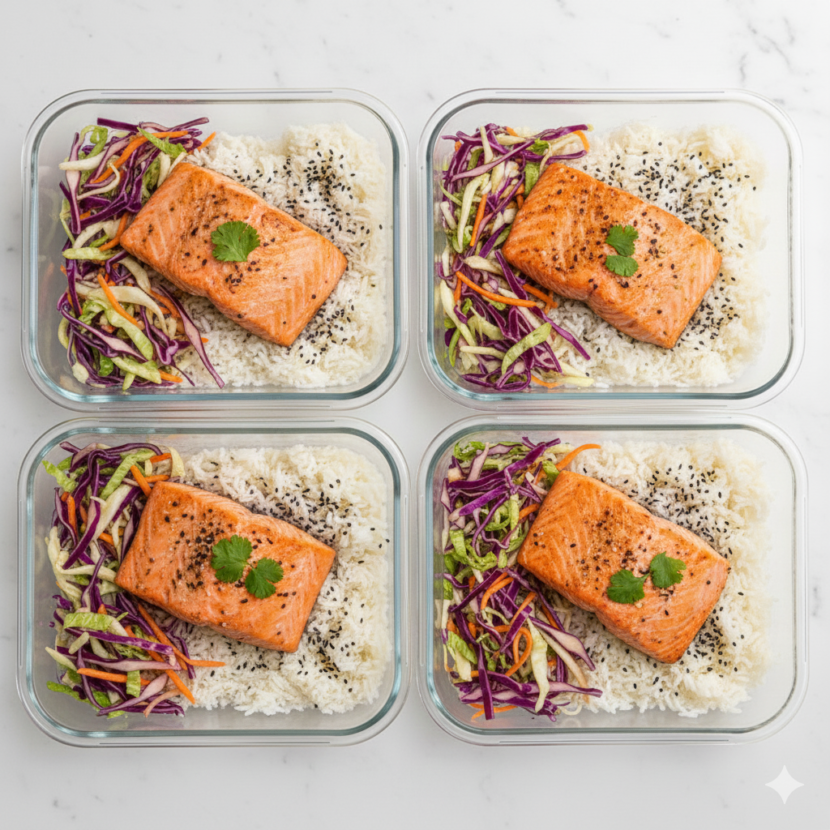
- Baked salmon + roasted Brussels sprouts + sweet potato + olive oil + lemon and dill
Step 3: Make Your Shopping List (10 minutes)
Write down everything you need, organized by section of the grocery store. Check what you already have at home first. Don’t forget basics like olive oil, salt, pepper, and aluminum foil or parchment paper.
Pro tip: Buy pre-cut vegetables if your budget allows. Yes, they’re more expensive, but if it’s the difference between actually meal prepping or not, they’re worth every penny.
Step 4: Shop Smart (30-45 minutes)
Stick to your list. This isn’t the time for impulse purchases. Get in, get what you need, get out. If you hate grocery shopping, consider pickup or delivery—the small fee is worth it if it means you’ll actually meal prep.
Step 5: Prep Your Workspace (10 minutes)
Before you start cooking, set yourself up for success:
- Clear your counters completely
- Empty the dishwasher so you have somewhere to put dirty dishes
- Get out all the containers you’ll need
- Line baking sheets with parchment paper or foil for easy cleanup
- Fill your sink with hot soapy water for easy cleaning as you go
- Put on music or a podcast—this should be enjoyable, not a chore
Step 6: Start with the Longest-Cooking Item (2-3 hours total cooking time)
Whatever takes the longest to cook goes in first. Usually this is your protein or your carb.
If you’re cooking chicken: Preheat your oven to 400°F. Season chicken breasts or thighs with olive oil, salt, pepper, and any herbs or spices you’re using. Bake for 20-30 minutes depending on thickness, until the internal temperature reaches 165°F.
If you’re cooking rice or quinoa: Get this started on the stove. Follow package directions. Rice cookers are also your friend here.
If you’re baking sweet potatoes: Pierce them with a fork, place directly on the oven rack, and bake at 400°F for 45-60 minutes until soft.
While these are cooking, move to your vegetables.
Step 7: Roast Your Vegetables
This is the easiest, most foolproof way to cook vegetables in bulk, and everything tastes better roasted.
Chop your vegetables into similar-sized pieces. Toss with olive oil (about 1-2 tablespoons per baking sheet), salt, and pepper. Spread in a single layer on baking sheets—don’t crowd them or they’ll steam instead of roast.
Roast at 400°F until tender and lightly browned:
- Broccoli, cauliflower, Brussels sprouts: 20-25 minutes
- Bell peppers, zucchini, onions: 25-30 minutes
- Carrots, sweet potatoes: 30-35 minutes
- Cherry tomatoes: 15-20 minutes
Flip vegetables halfway through for even browning.
Step 8: Let Everything Cool (15-20 minutes)
This is important. If you pack hot food into containers immediately, condensation builds up and makes everything soggy. Let your food cool to room temperature first. Use this time to clean your kitchen.
Step 9: Portion and Store
Divide your food into containers. You have two main approaches:
Option A: Complete meals. Each container has protein, carb, and vegetable already portioned. Grab and go. This works best if you’re eating the same thing multiple days in a row.
Option B: Component storage. Keep proteins, carbs, and vegetables in separate containers. Build your meal each day. This provides more variety and some foods stay fresher this way.
Label containers with the date if you want to be organized. Store most things in the refrigerator for up to 4-5 days. Some items (like cooked grains or certain proteins) can be frozen for longer storage.
What Containers You Actually Need
You don’t need fancy, expensive containers. You need containers that:
- Are microwave-safe
- Don’t leak
- Are the right size for your portions
- Stack well in your fridge
Good options:
- Glass containers with snap lids (my favorite—they don’t stain or hold smells)
- BPA-free plastic containers
- Even disposable containers work fine if you’re on a budget
What you need:
- 5-7 larger containers (4-6 cup capacity) for complete meals or component storage
- A few smaller containers for sauces, dressings, or toppings
- Maybe some divided containers if you like keeping foods separated
Start with what you have. Seriously. You can use Tupperware from 1987 if it still seals. Don’t let not having perfect containers stop you from meal prepping.
Foods That Meal Prep Like Champions
Some foods were made for meal prep. They taste good reheated, hold their texture, and last all week without getting weird.
Proteins that hold up:
- Chicken thighs (stay moist better than breasts)
- Ground meat (turkey, beef, chicken)
- Hard-boiled eggs
- Baked salmon
- Shrimp (add to meals fresh, stays good 2-3 days)
- Tofu (especially if pressed and baked)
Vegetables that stay good:
- Roasted broccoli, Brussels sprouts, cauliflower
- Roasted root vegetables (sweet potatoes, carrots, beets)
- Sautéed peppers and onions
- Roasted asparagus
- Cherry tomatoes (roasted)
Carbs that last:
- Brown rice, white rice, wild rice
- Quinoa
- Pasta (slightly undercooked holds up better)
- Farro, barley
- Baked or roasted potatoes
What to prep separately or add fresh:
- Leafy greens (prep them, but keep separate until eating)
- Avocado (add fresh or it browns)
- Fresh herbs
- Crunchy toppings (nuts, seeds, croutons)
- Dressings and sauces (store separately)
Level Up Strategies (Once You’ve Got the Basics Down)
After you’ve done basic meal prep a few times and it feels manageable, try these upgrades:
Batch cook proteins multiple ways. Instead of seasoning all your chicken the same, divide it and make some with Italian herbs, some with taco seasoning, some with lemon pepper. Same protein, different flavors throughout the week.
Prep versatile bases. Make a big batch of seasoned ground turkey or shredded chicken that can become tacos, burrito bowls, pasta sauce, or salad topping depending on what you pair it with.
Mason jar salads. Layer dressing on the bottom, sturdy vegetables in the middle, greens on top. Shake and eat. They stay fresh for 4-5 days without getting soggy.
Freezer-friendly extras. Double your recipe and freeze half. Future you will be grateful. Soups, chilis, casseroles, and cooked grains all freeze beautifully.
Breakfast prep. Overnight oats, egg muffins, breakfast burritos (frozen individually), chia pudding, or even just hard-boiled eggs make mornings infinitely easier.
Snack prep. Portion out nuts, cut vegetables with hummus, cheese and crackers, or energy balls so healthy snacking is as convenient as grabbing chips.
Different Meal Prep Styles (Find What Works for You)
There’s no one right way to meal prep. Here are the main approaches—try different ones to see what fits your life.
The Full Meal Prep: Cook complete meals on Sunday, eat them throughout the week. Best for people who want zero cooking during the week and don’t mind eating similar meals.
The Ingredient Prep: Chop vegetables, cook proteins and grains, but assemble meals fresh. Best for people who like variety and enjoy a bit of cooking but want it to be fast.
The Batch Cook: Make 2-3 recipes in large quantities (like a big pot of chili, a pan of lasagna, a batch of stir-fry). Portion and refrigerate or freeze. Best for people who want home-cooked meals with minimal effort.
The Half-Week Prep: Prep Sunday for Monday-Wednesday, prep again Wednesday for Thursday-Saturday. Best for people who want maximum freshness and don’t mind two shorter prep sessions.
The Breakfast + Lunch Prep: Prep these two meals, cook dinner fresh. Best for people who enjoy cooking dinner but need their mornings and lunches handled.
The Hybrid: Mix and match strategies. Maybe you prep lunches fully but just cook components for dinners. Best for most people, honestly.
Troubleshooting Common Problems
“My food gets boring by day 4.” Prep sauces and toppings separately to change up flavors. A basic chicken and rice bowl becomes Mediterranean with tzatziki, Asian with soy-ginger sauce, or Mexican with salsa and avocado.
“I don’t have time for 3 hours on Sunday.” Split your prep. Do 90 minutes Sunday, 90 minutes Wednesday. Or prep just one meal instead of trying to do everything.
“My vegetables get soggy/gross.” Don’t overcook them during prep—they’ll cook more when reheated. Store high-moisture items separately. Keep dressings and sauces separate until eating.
“I’m not hungry for what I prepped.” This is why component prep works better for many people. Having pieces ready means you can adjust based on what sounds good. Also, prep 2-3 options so you have choices.
“Everything tastes bland by mid-week.” You’re probably under-seasoning. Season more generously than you think you need to. Keep hot sauce, fresh herbs, lemon juice, and good salt on hand to brighten flavors before eating.
“My family won’t eat meal-prepped food.” Start with just prepping your own lunches. Or prep components (protein, veg, carbs) and let everyone build their own plates at dinner. Kids are often more willing to eat food they helped assemble.
Your First Week: A Simple Plan
Feeling overwhelmed? Here’s exactly what to do for your first attempt:
Monday-Friday Lunches:
- Baked chicken thighs with garlic and herbs
- Roasted broccoli with olive oil and lemon
- Brown rice
- Store in 5 containers
Sunday prep:
- Put rice on to cook (45 minutes mostly unattended)
- While rice cooks: season and bake chicken (30 minutes)
- While chicken bakes: chop and roast broccoli (25 minutes)
- Let everything cool while you clean
- Portion into containers
- Pat yourself on the back
Total time: About 90 minutes including cleanup
That’s it. That’s meal prep. One protein, one vegetable, one carb, five containers. You just handled lunch for the entire week.
The Real Secret to Making This Stick
Here’s what nobody tells you about meal prep: the first time will feel awkward and take longer than you expect. You’ll probably forget something at the store. Your timing will be off. Something might burn or turn out weird.
That’s all completely normal and fine.
Meal prep is a skill. Like any skill, you get better with practice. The fifth time you do it will be smoother than the first. The tenth time will feel easy. By the twentieth time, you’ll have your system dialed in and you won’t even need to think about it.
The key is to start smaller than you think you need to, be patient with yourself during the learning curve, and remember that imperfect meal prep that actually happens beats perfect meal prep that stays in your head.
You don’t need matching containers, a pristine kitchen, or hours of free time. You just need to start. Pick one meal. Choose simple foods. Give yourself two hours this Sunday. That’s it.
Your future self—the one who’s not standing in front of the refrigerator at 7:30 PM, exhausted and starving, about to order takeout again—will thank you.